
Like many New Englanders, we know that you value your trees. But the roots of mid- to larger-sized trees can create complications, particularly if you are having any construction or landscaping work completed in your yard.
You might be wondering: will cutting tree roots kill a tree?
Yes, cutting tree roots can damage or even kill a tree, but the risk depends on factors like which roots are cut, their size, how many are removed, and how close the damage is to the trunk.
Whether you’re reading this article because you’re trying to protect your tree roots or because you want to cut them since they’re in the way, we can help clarify some important things that you ought to know. Maybe your tree roots have already been damaged and you’re worried about what happens now. We’ll cover all of that.
Jump to:
Can Cutting Tree Roots Kill a Tree?
What Happens When Tree Roots Are Cut?
Which Tree Roots Are Most Dangerous to Cut?
Can You Cut Above-Ground Tree Roots Without Killing the Tree?
Tree Root Damage Caused by Construction
Signs of Damaged Tree Roots to Watch Out For
Getting Tree Roots Professionally Evaluated by Seacoast Tree Care
Choosing Tree Care in Southern NH, Northeastern MA, and Southern ME
Can Cutting Tree Roots Kill a Tree?
Cutting the roots of a tree can, in fact, kill or damage the tree. But it depends on a number of factors.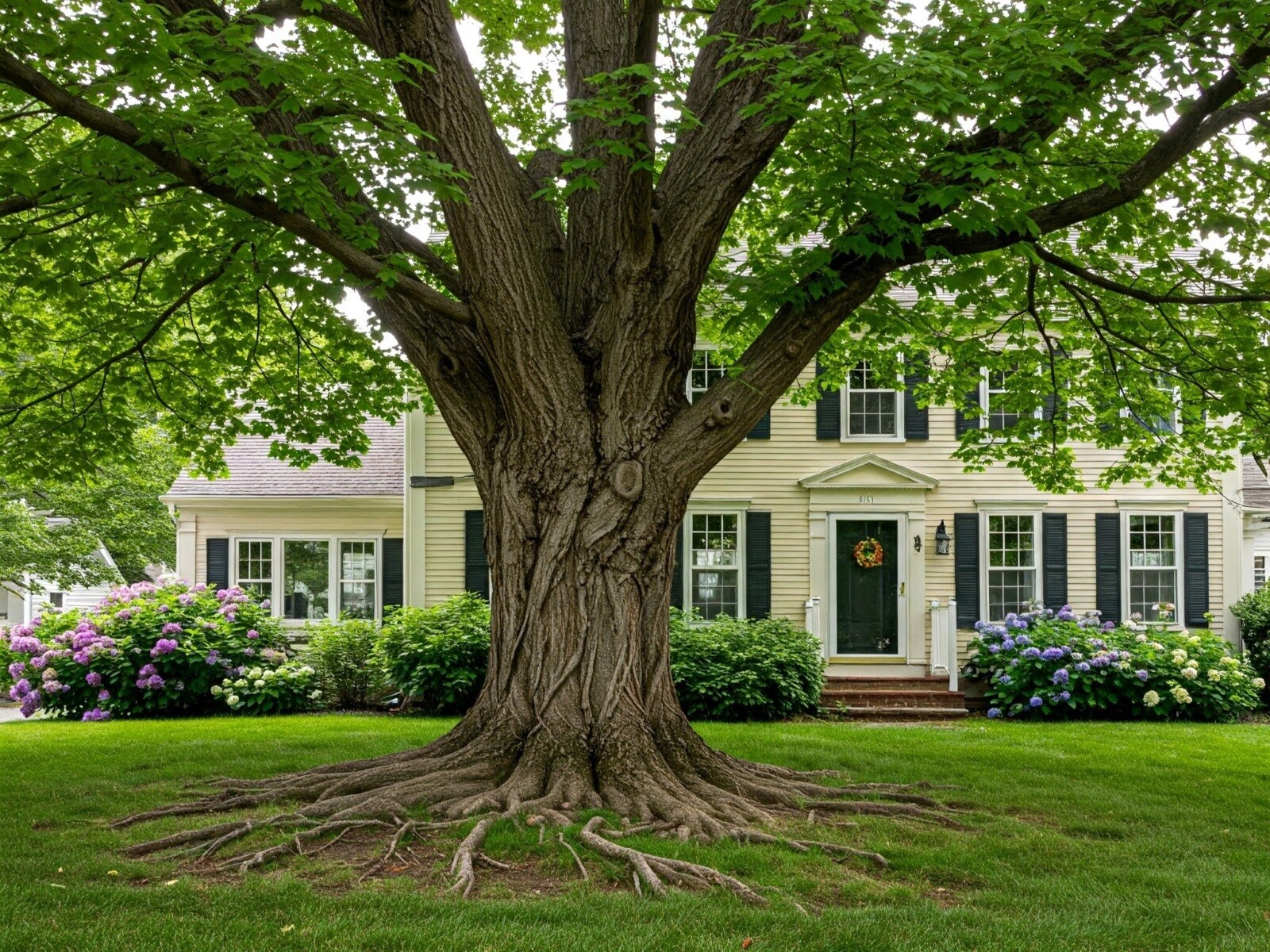
- Size of the roots: The size of the roots that have been cut is an important factor. Larger roots play an important role in tree stability and structural support. That means cutting large roots could compromise the tree’s stability.
- Number of roots cut: In addition to the size of the roots, it’s also about how many were cut. Smaller roots play less of a role in structural support and more of a role in providing water and nutrients to the tree. If a large number of small roots are cut, it could reduce the tree’s ability to take in food and water.
- Proximity to the trunk: Roots that are cut close to a trunk are more concerning since they play more of a role in anchoring the tree in the ground.
- The tree’s existing health: Cutting the roots of an unhealthy tree has more power to be detrimental than cutting the roots of a tree in good health. Root loss can add to existing problems.
- The species of the tree: Different species are going to have a different level of tolerance when it comes to root problems.
We do see construction near trees kill roots and sometimes that does lead to a tree’s decline or death.
What Happens When Tree Roots Are Cut?
Cutting tree roots can impact a tree’s support system as well as its ability to absorb water and nutrients from the ground. While larger roots often serve a key role of anchoring a tree into the ground and providing stability, smaller roots help take in water and mineral nutrients that feed the tree.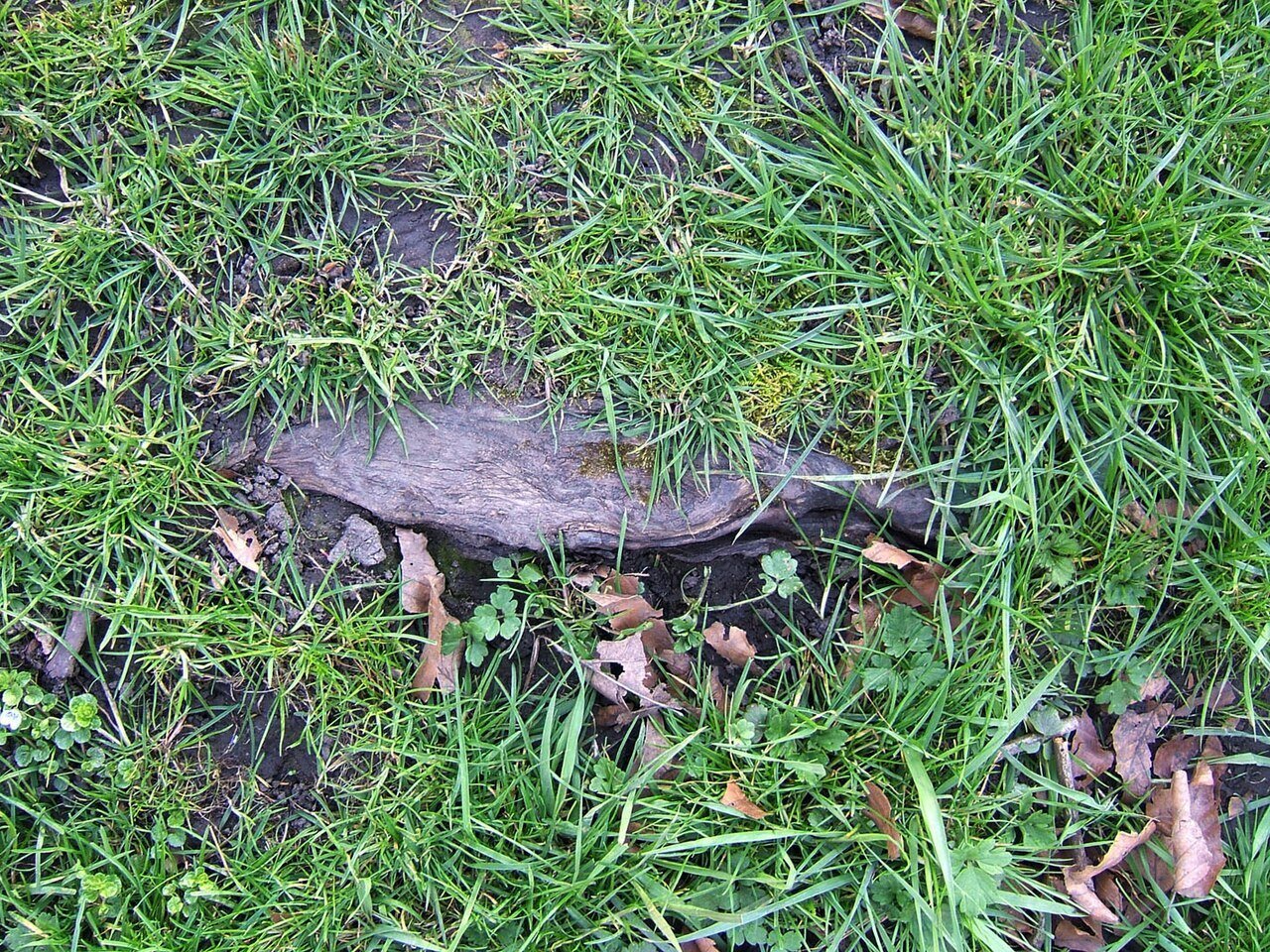
When a tree’s roots are cut, both stability and water/nutrient intake are compromised. Cutting large roots could be more of an immediate risk if they did provide a lot of support. A tree could start leaning and become more of a risk during strong winds or storms.
After a tree’s roots are cut, it is also likely going to be stressed and become more vulnerable to other problems. Root damage can leave a tree less equipped to cope with drought, pests, and disease. And severed roots can actually become an entry point for decay.
If you are reading this article because you already know there is tree root damage, you’ll want to consult with a Certified Arborist about next steps.
Which Tree Roots Are Most Dangerous to Cut?
Large, structural tree roots that are close to the trunk are generally the most dangerous to cut since they do provide stability and support. These roots anchor the tree into the ground and cutting them can compromise stability.
But as we’ve mentioned, smaller roots do tend to serve as “feeder roots,” and cutting too many of them can also be risky. Removing a large number of feeder roots can lead to substantial stress.
So how close to the trunk is too close?
There are zone protection maps that need to be followed to determine the answer to this. A Certified Arborist will follow A300 standards (established by the Tree Care Industry Association- TCIA) to make a science-based decision as to whether it’s possible to cut tree roots without killing the tree.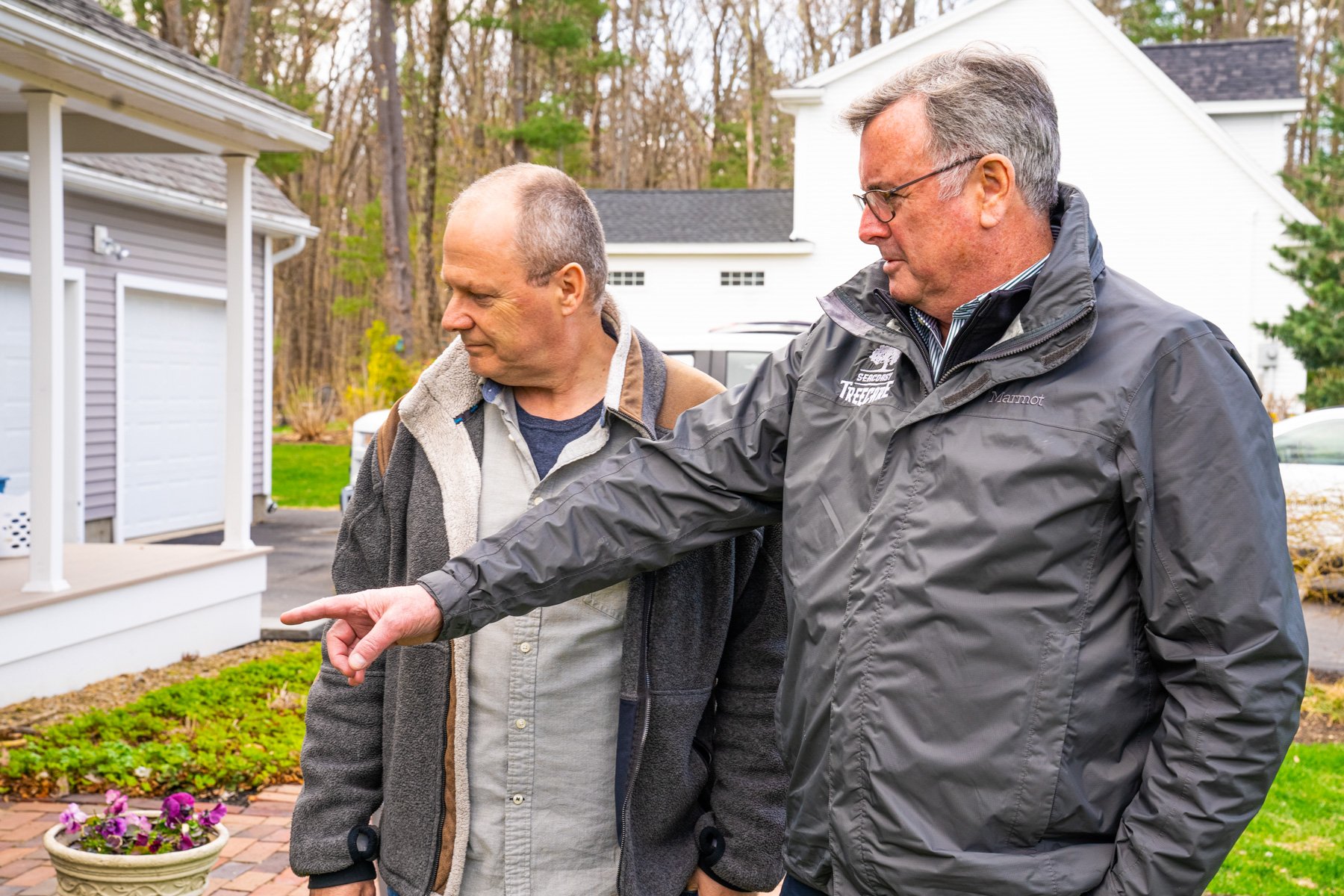
Can You Cut Above-Ground Tree Roots Without Killing the Tree?
Cutting tree roots without killing a tree is possible. But just because a tree root is exposed does not automatically make it one that is safe to remove. The same factors that we’ve been discussing still apply.
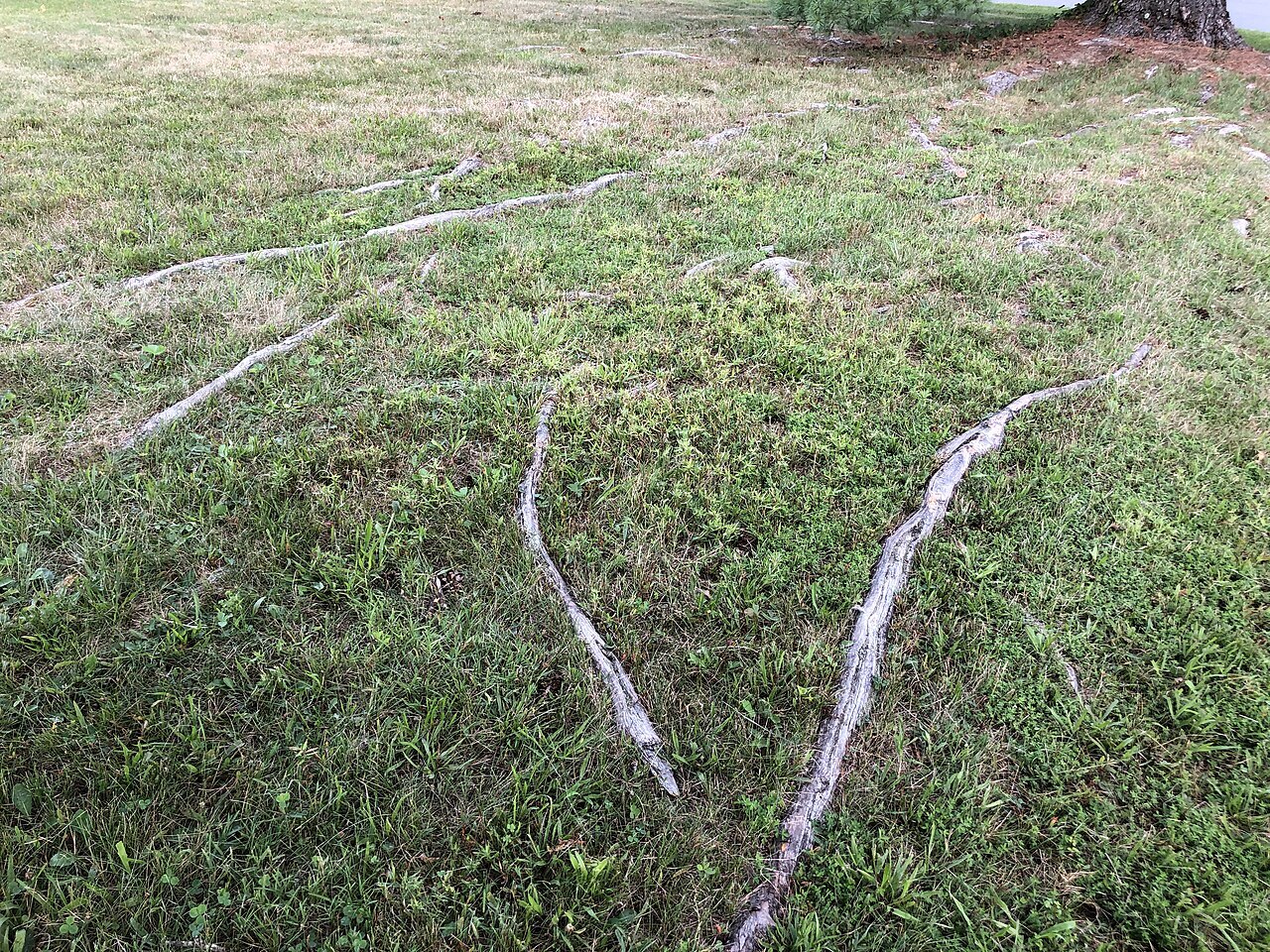
While we know that people are often frustrated by surface roots, they are quite common in mature trees. They become exposed over time due to soil erosion, compacted soil, or even just the normal growth pattern of the tree. We know that these roots sometimes interfere with the lawn or landscaping but it’s important to not just haphazardly cut them.
A Certified Arborist should always be called in to evaluate roots that you want to remove. Again, there are guidelines that can be followed to determine whether roots can be safely removed or not.
In cases where there is no way to safely remove roots that interfere with construction or hardscaping, removing the entire tree could end up being the most practical approach. We know that people want to do what they can to preserve trees (as do we!) but the project you’re having done could compromise the tree anyhow.
Tree Root Damage Caused by Construction
Tree root damage from construction can be a common occurrence when care is not taken to protect the roots. If you are looking to have work done in the vicinity of trees that you want to preserve, it’s important to consult with a Certified Arborist who can provide you with protective measures before any work is done.
If roots are damaged or cut due to a lack of protective measures, the negative impact doesn’t always happen right away. Dieback may not actually appear for several years. In the industry, we call this “contractor’s blight.”
In terms of larger, structural roots, special care needs to be taken to prevent leaning trees.
Signs of Damaged Tree Roots to Watch Out For
Tree root damage is not always immediately noticeable since most of a root system is typically hidden underground. If you’ve recently had construction or excavation performed, that’s obviously a clue. But as we mentioned above, damage can sometimes take years to show up.
Some signs of damaged tree roots can include:
- Thinning foliage
- Sparse canopy
- Discoloration of leaves
- Branch dieback
- Leaning
- Cracked or raised soil around the trunk
- Reduced growth
Of course, these symptoms can also be caused by other problems (including disease, pests, and environmental stress), making the diagnosis difficult.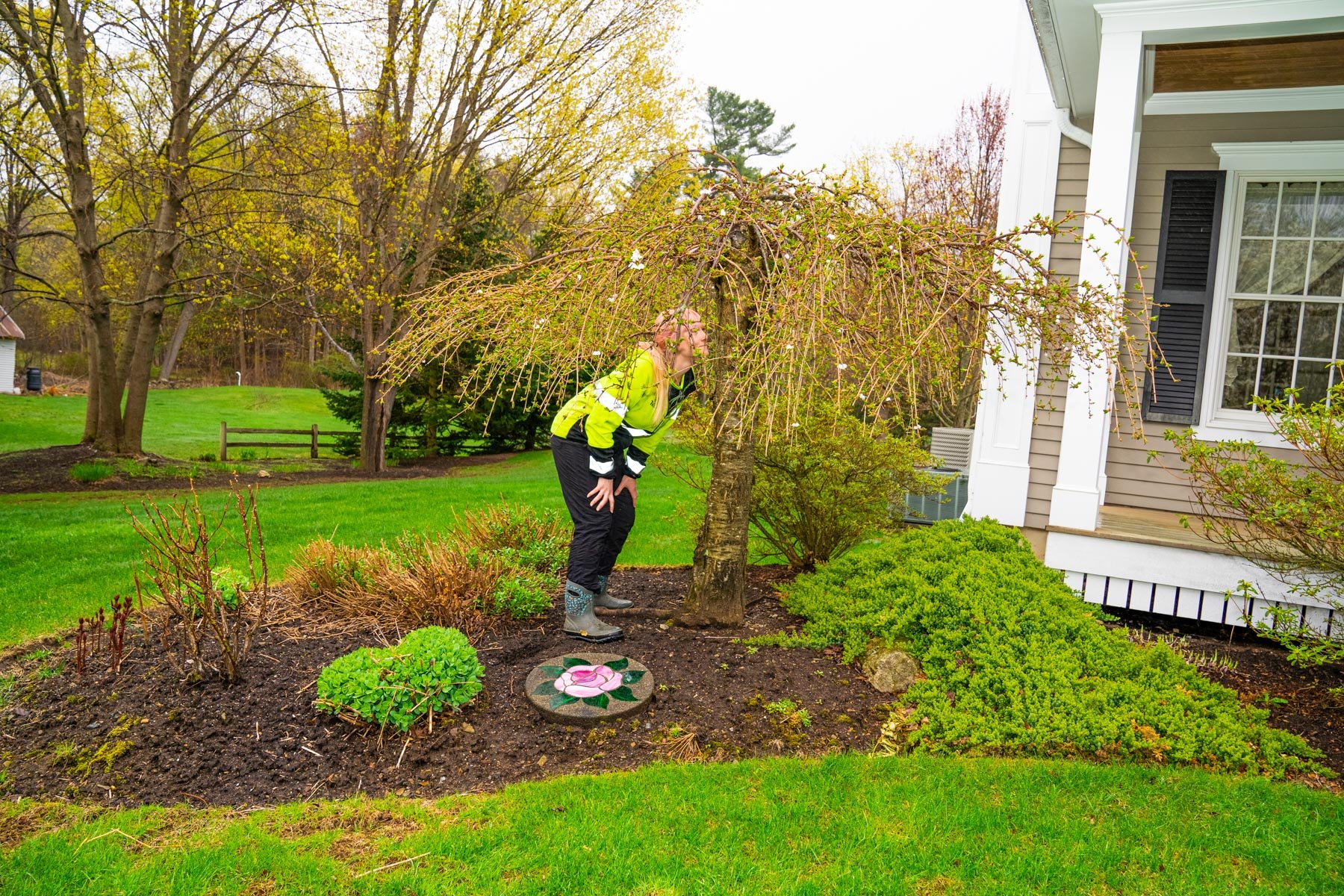
A Certified Arborist is your best chance at figuring out what’s going on. They will look at patterns of decline, examine the surrounding soil, inspect the root zone, and ask about the tree’s history. A history of construction or grading will be a clue in itself.
When will tree root damage show up?
When it’s severe, signs of damage can show up right away. But less severe tree root damage might take longer to show up. Then it becomes even more difficult to diagnose. That’s one of the reasons a Certified Arborist will inquire about the history of the property and any projects completed using machinery.
Getting Tree Roots Professionally Evaluated by Seacoast Tree Care
The best thing that you can do when it comes to protecting tree roots is to have them evaluated by a Certified Arborist in advance of having any construction done on your property.
There are also circumstances where tree roots are causing problems like tree roots under a sidewalk or tree roots under a patio.
Often, in these situations, tree removal ends up being necessary if the problem root can’t be safely removed. Even if the roots are cut, it’s possible new roots will develop and extend beneath the repaired sidewalk or patio again.
FAQs on Cutting Tree Roots
How long does it take a tree to show signs of root damage?
It depends on the severity of the damage. Severe damage or damage to a key structural root might show up quickly. But it could take as long as months or years for more subtle damage to smaller roots to show up.
Can damaged tree roots grow back?
Yes, damaged tree roots can potentially grow back. Phosphate-based fertilizer can influence increased root production but there is no guarantee and nothing will be an overnight fix.
Can a tree recover after roots are damaged during construction?
Yes, it is definitely possible for a tree to recover from damaged roots during construction. But recovery will depend on factors like the severity of the damage, how many and what roots were affected, and the tree’s health as a whole.
Does cutting tree roots make a tree more likely to fall?
It can. If you cut structural roots that help anchor a tree into the ground then it could become a fall risk.
How can you protect tree roots during a construction or landscaping project?
Consult with a Certified Arborist about how to protect tree roots during any planned construction or landscaping projects involving heavy machinery. They can help establish a tree protection zone so that any excavation can be planned around important roots.
Choosing Tree Care in Southern NH, Northeastern MA, and Southern ME
Dealing with any sort of tree problem can be stressful. But when you partner with a tree care expert, you’ll always have professional guidance and expertise leading the way.
At Seacoast Tree Care, our focus is on trees (as our name implies!). We are experts in the field and we’ve been doing this for a long time. We have the expertise to evaluate trees and their roots.
Of course, we can also assist with removal when it becomes necessary. In situations when trees do have to come down, we know it’s absolutely critical that it’s done right.
If you’re worried about a tree with damaged roots or you just want to do what you can to prevent damage, reach out to us and we’ll help you determine your next best steps.
Ready for safer and healthier trees at your Southern NH, Maine, or Northeastern Massachusetts home? Request your consultation and get a free quote for tree services. We service properties in and around Stratham, NH, Kittery, ME, and Haverhill, MA. By making a wise choice, you’ll know your trees are in good hands.
Image Sources: surface roots, damaged surface root