
Finding something wrong with your tree can be upsetting. Your trees are a valuable investment and the last thing that you want to worry about is losing them to a problem with disease. Some diseases are obviously worse than others, and figuring out what is going on as quickly as possible is important.
If your tree leaves have a scorched or blackened appearance it could be that you’re dealing with Fire Blight, which is a serious and destructive bacterial disease that is relatively common here in the Seacoast region.
In this article, we’ll talk about what you ought to know about Fire Blight disease to set you up for success.
Jump to:
What is Fire Blight?
What Causes Fire Blight?
What Does Fire Blight Look Like?
What are Fire Blight Treatment Options
Can you Prevent Fire Blight?
FAQs About Fire Blight
Choosing Tree Health Care in Southern NH, Northeastern MA, and Southern ME
What is Fire Blight?
Fire Blight is a bacterial disease that primarily affects fruit trees and ornamental plants. It is highly contagious and therefore spread by rain, wind, insects, and even pruning tools that have not been disinfected.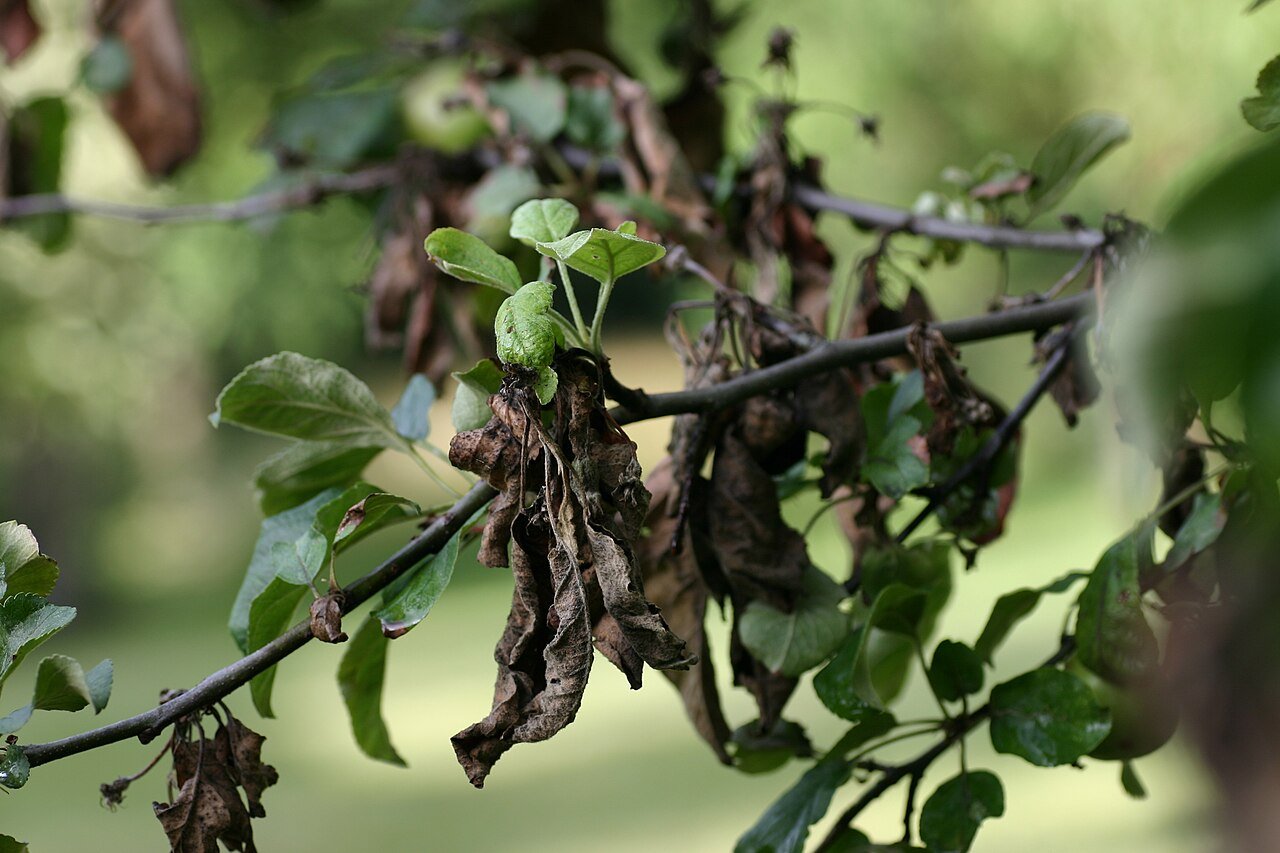
Fire Blight can thrive in warm, humid, and rainy conditions in the spring. Unfortunately, the Seacoast region has the optimal conditions for this disease to spread.
What Causes Fire Blight?
Fire Blight disease is caused by Erwinia amylovora, a rod-shaped bacterium. The pathogen can enter through blossoms, wounds, or other openings in the tree. It will spread rapidly during warm, humid, and rainy conditions.
The weather does play a big role in the growth and spread of this disease. But insects also commonly introduce the pathogen into trees as they move about.
What Does Fire Blight Look Like?
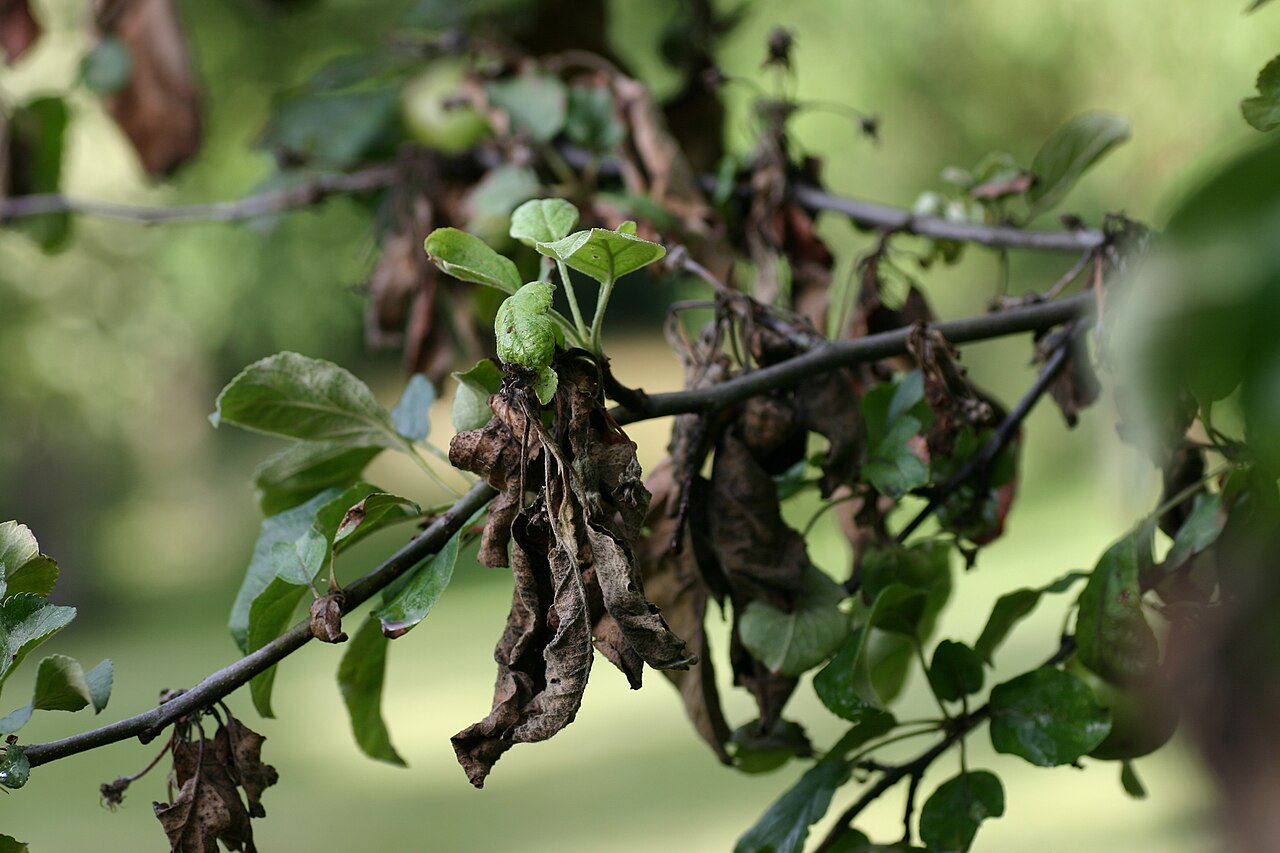
To determine if your tree is dealing with this disease, you’ll want to look for Fire Blight symptoms. Tissue that is infected with Fire Blight first appears water-soaked. But it will eventually turn brown or black, resembling fire damage.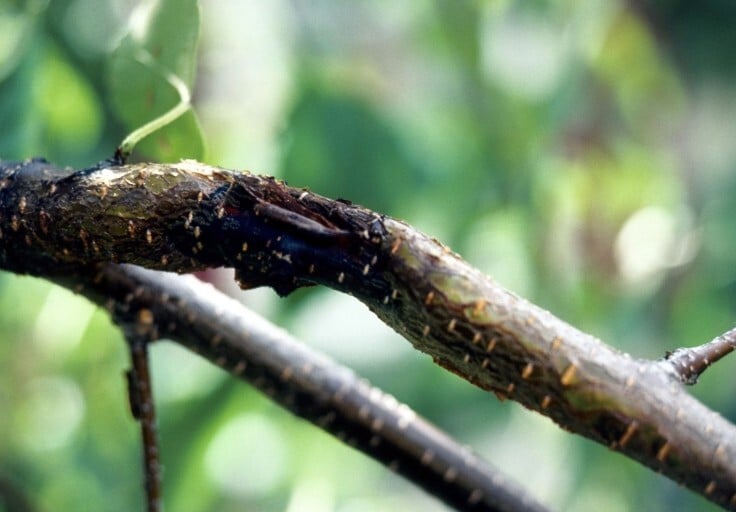
Young tree shoots also grow into a distinctive “shepherd’s crook” shape as they wilt.
Occasionally, homeowners mistake Fire Blight for frost damage. But the “shoot hooking” is probably the most distinctive feature of the disease. While frost damage can also cause leaves to turn black, it will not typically cause the shepherd’s crook wilting.
Fire Blight can also cause oozing and cankers to form on trees (something that you would not see with frost damage).
What are Fire Blight Treatment Options?
Our go-to method for treating Fire Blight is proper pruning and sanitation. Pruning out the disease is a huge factor in its control.
Of course, it’s important to remember that pruning tools can spread the disease, so they must be frequently cleaned during the pruning process or you risk spreading the disease to healthy parts of the tree. Tools need to be thoroughly disinfected after each cut. This sanitation step is critical in controlling Fire Blight disease, as is proper removal of the pruned material.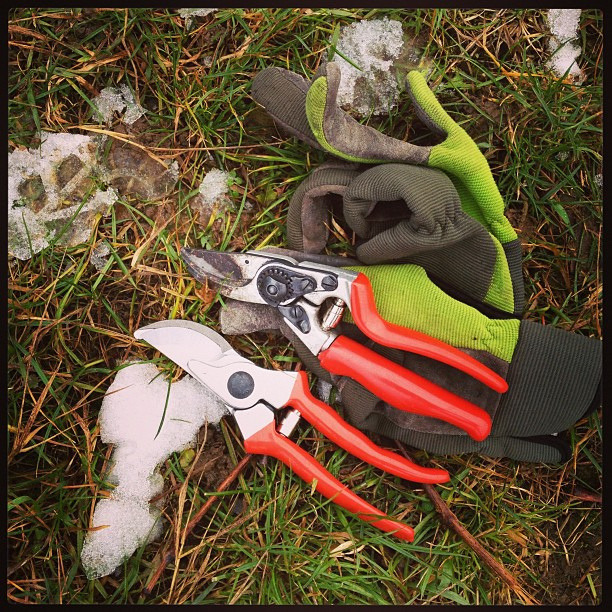
Fire Blight treatment can also include sprays which include streptomycin sulfate and copper-based fungicides. But the sprays are not a replacement for disease pruning, which is so critical to getting the diseased portions out of the tree before they spread.
We would ideally prune these trees during the dormant season.
Can You Prevent Fire Blight?
Unfortunately there is no way to 100-percent prevent Fire Blight.
You can always take steps to promote good tree health and implement best practices, but because this disease is so contagious (and also so weather-dependent), there are a lot of factors that are going to be out of your control.
Since it cannot be entirely prevented, early control is key. Spotting Fire Blight symptoms early on and taking swift action will be the best way to prevent this disease from becoming serious. If left uncontrolled, Fire Blight can kill your tree.
FAQs About Fire Blight
Before we wrap up this article, let’s recap some of the most commonly asked questions and also cover a few things we may not have fully addressed.
If you still have questions about Fire Blight disease, do not hesitate to contact us.
What are common Fire Blight symptoms?
Fire Blight symptoms show up as diseased tissue. At first, it looks like the affected area has been soaked with water, eventually turning brown or black to resemble fire damage (hence the disease’s common name). The tree can also have open cankers that ooze an orange substance. Fruit from the tree can also display signs of an oozing substance.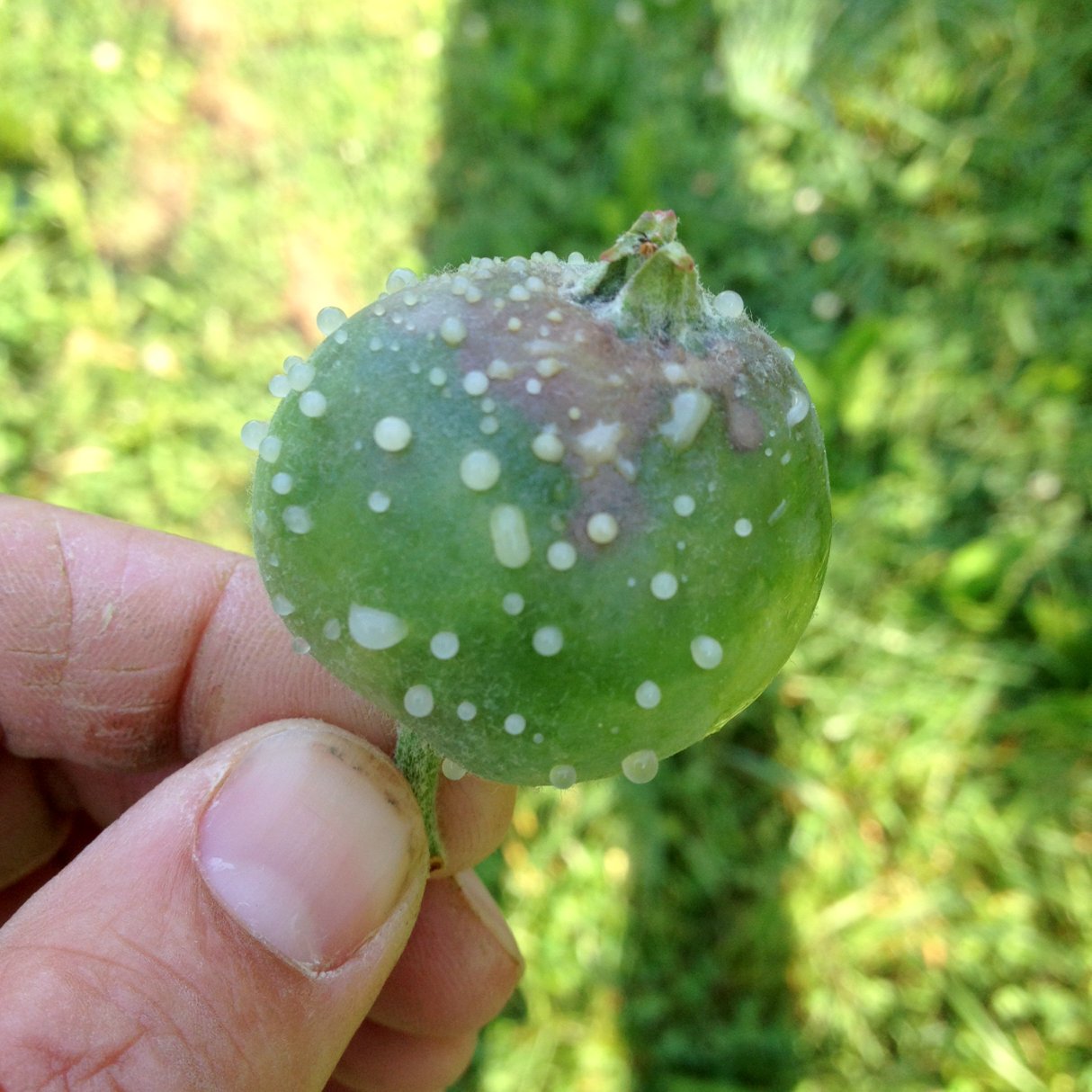
How does Fire Blight spread?
Fire Blight disease is caused by the bacterium known as Erwinia amylovora. The pathogen spreads quickly during warm and wet conditions and can penetrate a tree’s system through most openings, such as blossoms or wounds.
Insects also commonly introduce the pathogen into trees and spread it from one tree to another (or to different parts of the tree itself).
Can Fire Blight kill my tree?
Yes, Fire Blight can kill your tree. Particularly if the infection spreads to the main trunk and the roots. In time, Fire Blight can lead to systemic infection and girdling, which can lead to tree death.
If the disease is serious enough (and spreading rapidly), trees could possibly be lost in a single season. This is why early detection and treatment is so important.
Is Fire Blight contagious to other trees on my property?
Yes, Fire Blight disease can be highly contagious to the trees on your property (and to trees in the surrounding area in general). Since the disease can be spread by wind, rain, insects, and pruning tools, it can easily spread beyond the initially infected tree.
Proper pruning (including disinfecting pruning tools) and disposal is critical to prevent the spread of this disease.
But in some cases, if the infection is already severe, tree removal could be the best option to prevent this disease from spreading to other trees on your property. This will largely depend on the severity of the disease and can be judged by an experienced local arborist.
How do arborists treat Fire Blight disease?
Proper pruning plays a critical role in Fire Blight treatment. This is ideally performed in the dormant season.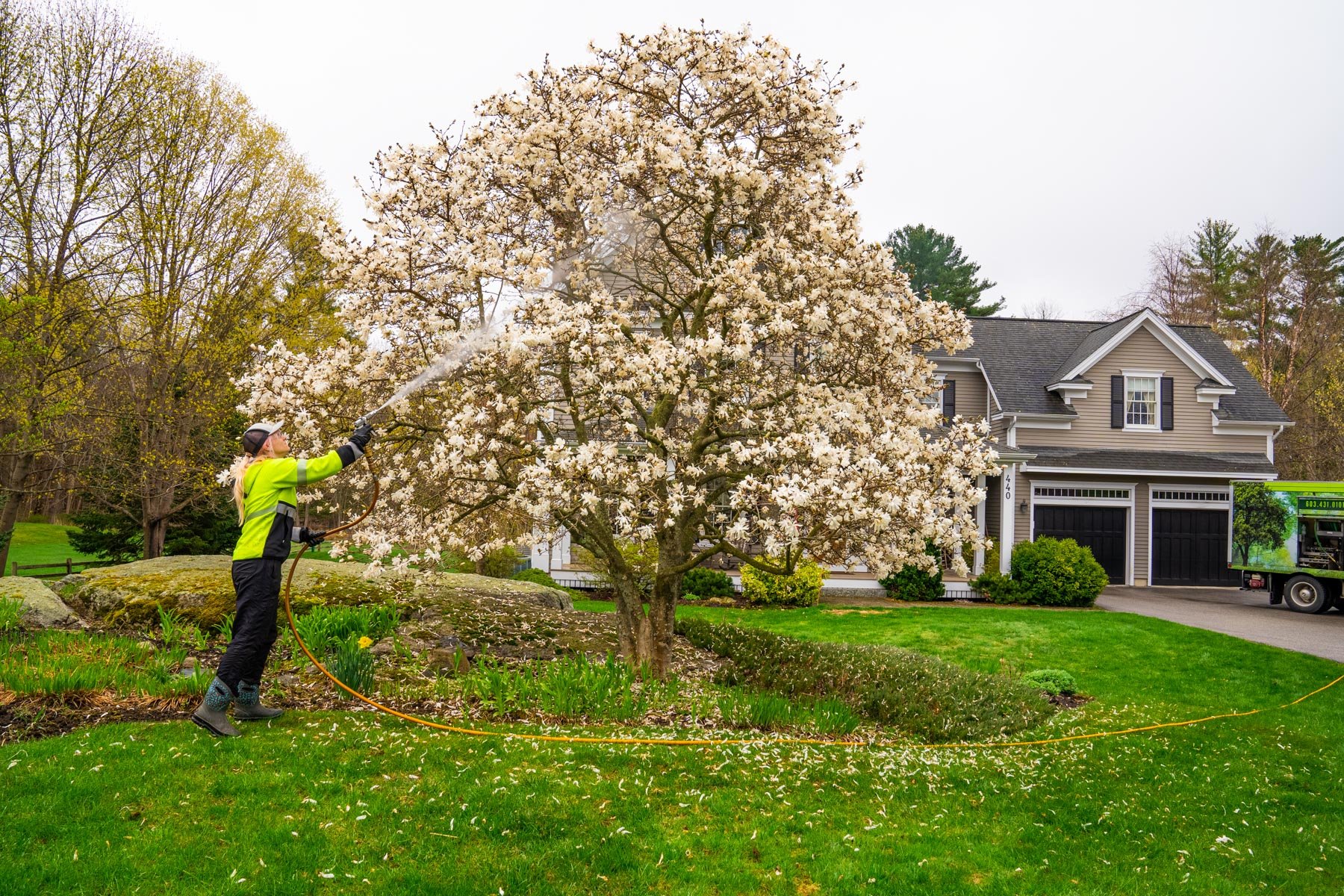
Fire Blight treatment can also include fungicide sprays. These sprays alone are not a replacement for disease pruning, which is the most efficient way to remove diseased portions before they spread.
Choosing Tree Health Care in Southern NH, Northeastern MA, and Southern ME
When it comes to managing your property’s tree health, you want to make a wise choice in tree health care services.
There are obviously plenty of companies offering pruning and other tree care services, but the best tree care services will help ensure problems are spotted early and addressed properly. Pruning mistakes can actually lead to more problems and even the spread of diseases like Fire Blight.
Don’t just assume that a tree service knows what they’re doing. Do some research and look for highly trained and experienced services.
We recommend looking for tree care companies that employ Certified Arborists. This will ensure a high level of expertise.
We also advise seeking companies that are focused on tree care. At Seacoast Tree Care, our focus is on trees (as our name implies!). We are experts in the field and we’ve been doing this for a long time.
Ultimately, you want to find a company that has your best interest at heart and that you can build a long-term relationship with. Your property requires ongoing care and it’d be great to partner with a company that you truly trust.
At Seacoast Tree Care, we take the work that we do quite seriously. We are committed to preserving trees in the New England area by performing vital services like tree pruning and disease control the right way.
When it comes to something as serious as Fire Blight, you simply don’t want to take any chances.
Ready for safer and healthier trees at your Southern NH, Maine, or Northeastern Massachusetts home? Request your consultation and get a free quote for tree pruning services. We service properties in and around Stratham, NH, Kittery, ME, and Haverhill, MA. By making a wise choice, you’ll know your trees are in good hands.
Image Sources: leaves affected by fire blight, bark affected by fire blight, fruit affected by fire blight, pruning tools
