

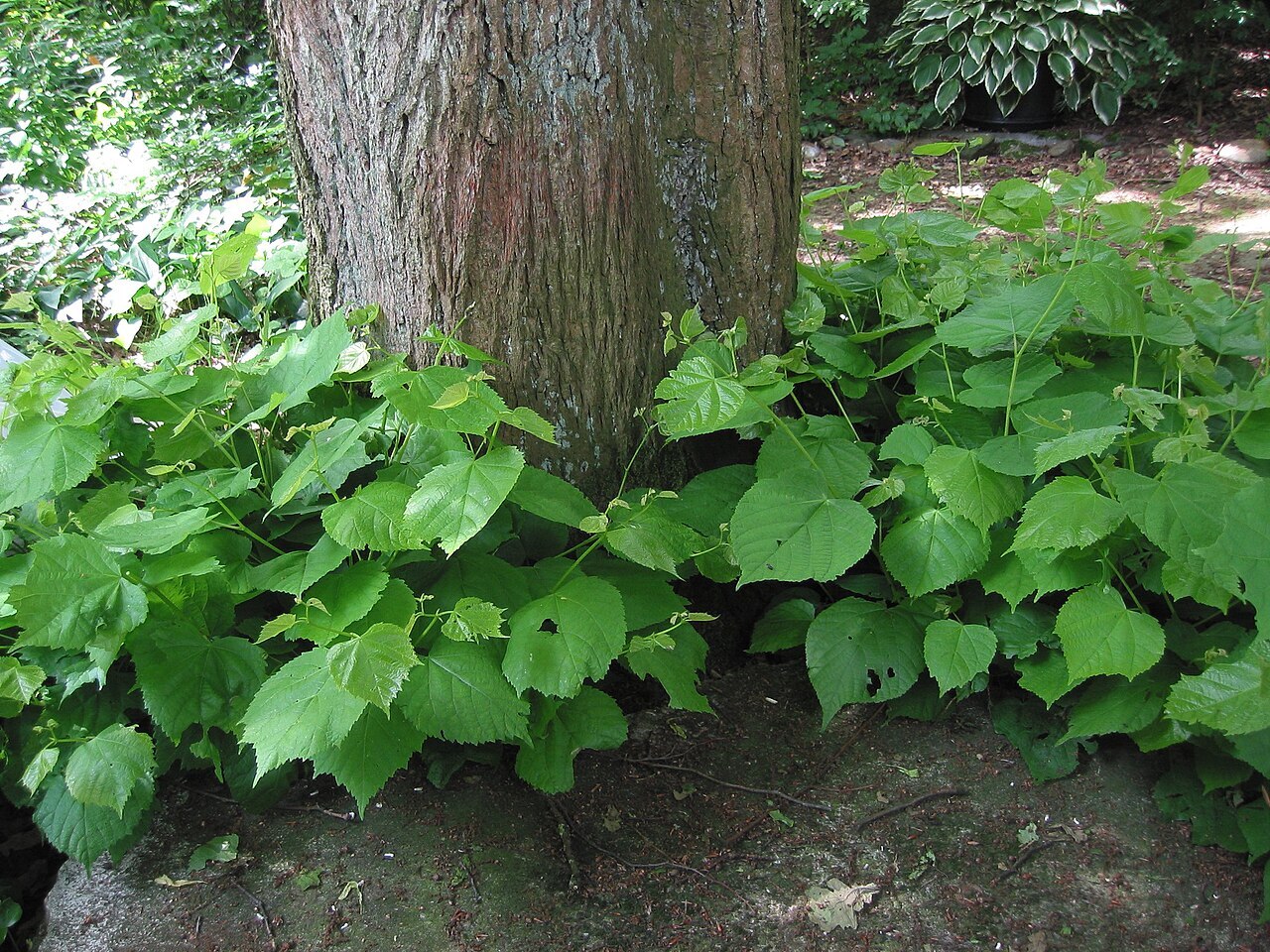
If you’ve ever stepped outside to look at your trees and spot some new growth at the base, you may be left wondering what’s happening. Is it a sign of an unhealthy tree? Is there some underlying issue with your tree you need to be concerned about?
Tree shoots at the base of a tree are called tree suckers (or sometimes root suckers) and can cause trouble for your landscape.
Tree suckers are a sign that your tree is under stress. Aside from inherent health risks, they can also become unsightly, growing chaotically and as bushy clumps.
In this article, we’ll talk about how to deal with tree suckers if they pop up underneath your New England trees. While problems like these can be a source of frustration, there are steps you can take to remedy the situation.
Jump to:
What Is a Tree Sucker?
What Causes Tree Suckers?
How to Get Rid of Tree Suckers
FAQs About Tree Suckers
Choosing Tree Care in Southern NH, Northeastern MA, and Southern ME
What Is a Tree Sucker?
“Tree sucker” is a common term in the arborist world used to describe tree shoots at the base of a tree. Suckers emerge from the roots or the tree base when a tree is under stress. They are considered unwanted growth since they form and grow outside the tree’s normal structure.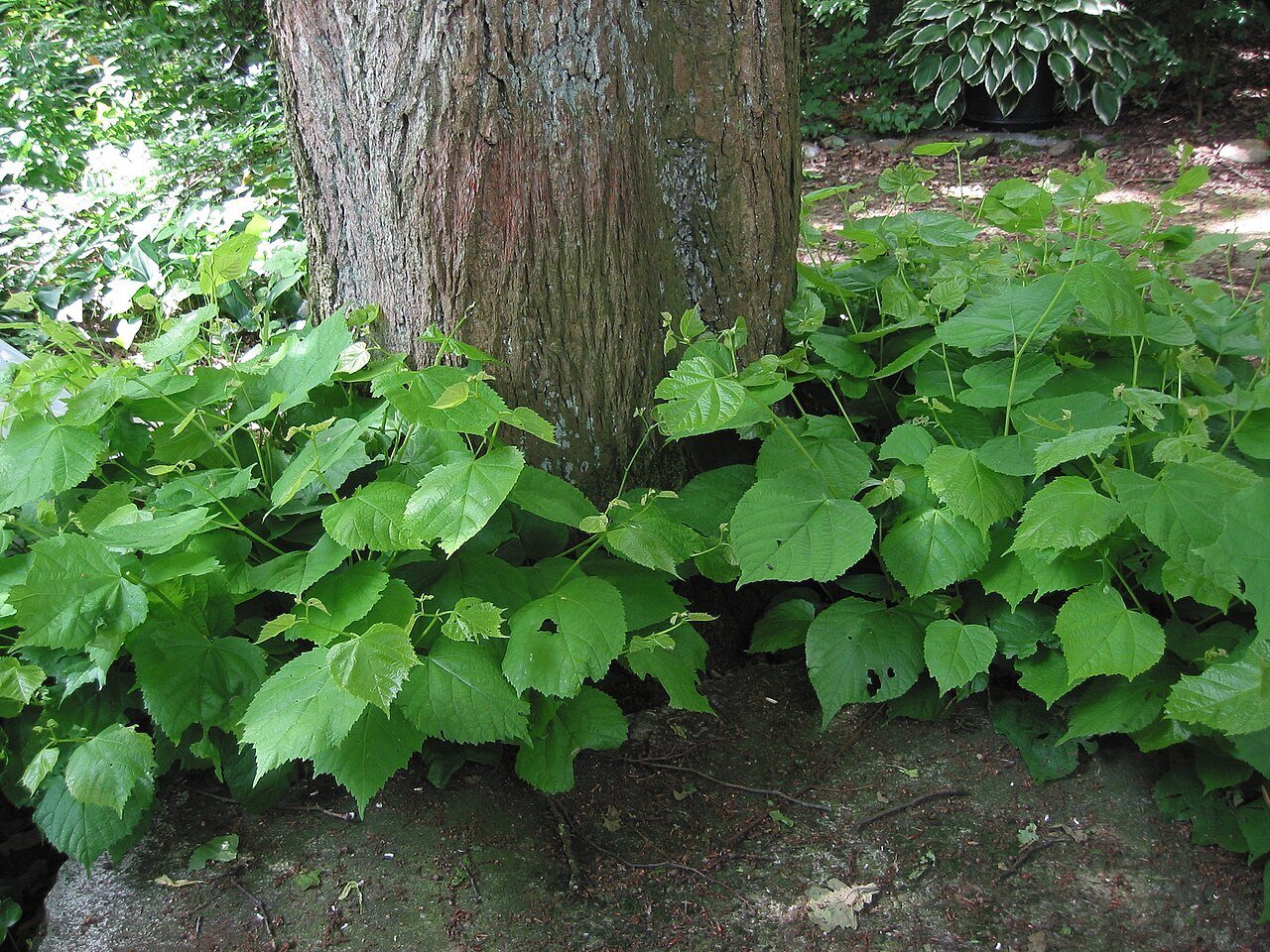
These shoots get their name because they suck nutrients and water from the primary tree. If left unmanaged, this can lead to tree decline or even death.
Tree suckers are also sometimes referred to as “root suckers” since they commonly grow from the roots.
The good news is that tree suckers can be addressed with pruning. They are not a major problem, but they can definitely cause your tree trouble over time if left alone. And since they can be indicative of other issues, it’s definitely worth paying attention if you spot suckers sprouting.
What Causes Tree Suckers?
Generally, stress or damage trigger the growth of tree suckers. This pushes a tree into “survival mode” during which it tries to push out new growth as quickly as possible. The result is these unwanted shoots growing from the base and roots.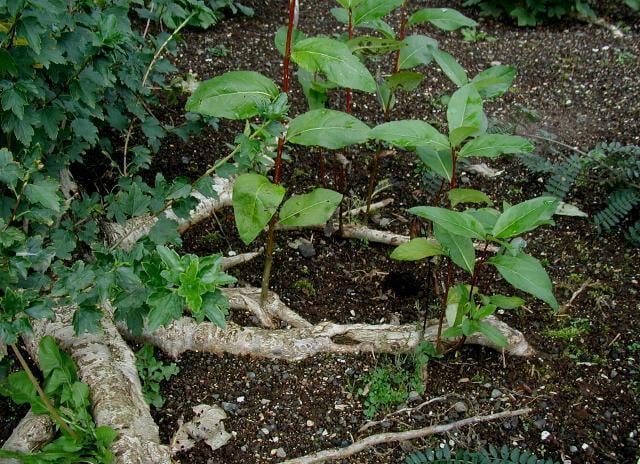
Here are some of the common causes for tree sucker growth.
-
Damage to the Roots or the Trunk: When the roots or the trunk get damaged (commonly by lawn care equipment like mowers and line trimmers), the tree might respond by trying to grow new shoots. Root disturbance due to transplanting or compaction can also lead to sucker growth.
-
Tree Decline from Pests or Disease: Sometimes when a tree is declining from either disease or pest infestations, it might try to push out new growth as a “last-ditch effort” to survive.
-
Pruning Errors: When a tree is over-pruned (such as removing too many branches at once or cutting off too much of the canopy), it might respond by pushing new (but unwanted) growth in the form of tree suckers.
-
Improper Grafts: In some cases, tree suckers are not the result of stress or damage but are due to the way the tree was grown in the nursery. Trees grown in a nursery are sometimes actually two trees (the trunk and branches of one kind of tree grafted into the roots of another). If a tree is grown this way, it might be naturally prone to pushing out suckers.
You’ll know if a failed graft is the cause of suckers because the sucker leaves will be different from the main tree.
How To Get Rid of Tree Suckers
Since tree suckers are literally sucking life from your trees, you definitely want to get rid of them as quickly as possible.
Tree suckers need to be pruned with sharp pruners, cutting them off flush at their point of origin. You want to ensure a clean, precise cut that will heal quickly and not cause further problems.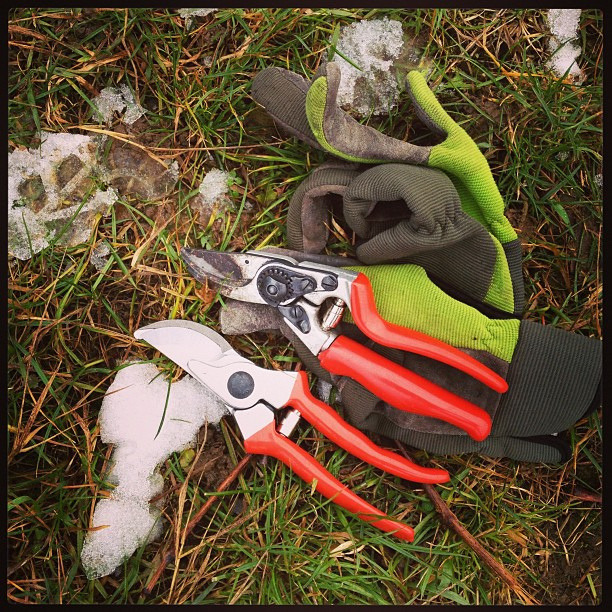
At Seacoast Tree Care, we will prune tree suckers as part of a larger project but we don’t offer this as a standalone service. If you just have a few tree suckers, you can use sharp pruners to get rid of them.
It is best to remove suckers as soon as they appear (usually in the spring). Avoid leaving stubs behind as this can lead to continued new tree sucker growth.
You can also apply a healthy layer of tree mulch around your tree to discourage future sucker growth. Just be sure to mulch properly. Avoid piling mulch up against the trunk as this is an improper mulching practice (often referred to as a “mulch volcano”) that can lead to more trouble.
Instead, create a mulch ring that looks like a donut with the tree trunk at the center of the ring.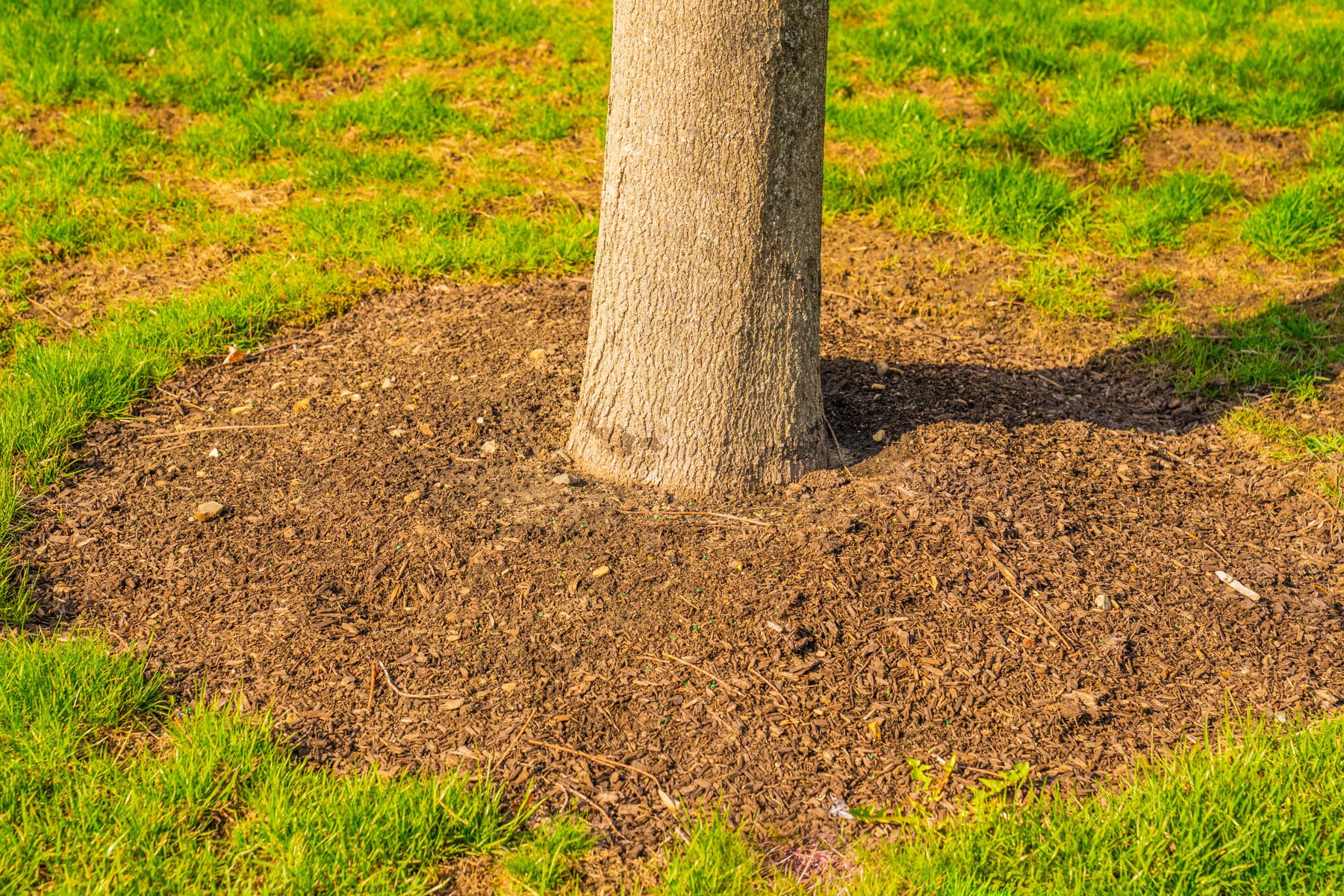
FAQs About Tree Suckers
Before we wrap up this article, let’s recap some of the key information you should know and also answer some commonly asked questions.
What is a tree sucker?
Tree suckers are young stems sprouting from the base of a tree. While these suckers are your tree’s attempt to grow new branches, something has gone wrong. Tree suckers are not good for trees because they suck the water and nutrients from the main tree, diverting critical resources to these offshoots.
Why do trees grow suckers at the base of the trunk?
While some species are naturally prone to growing tree shoots at the base of the tree (crabapples, maples, and sumac among those), suckers do generally indicate a problem. A tree sucker explosion might mean that your tree has been damaged or is experiencing stress.
How do I get rid of tree suckers properly?
Tree suckers need to be pruned off of your tree using sharp pruners. Make sure that you remove the entire sucker, starting from its base origin. Leaving stubs behind can lead to regrowth and new suckers.
Will tree suckers grow back after I remove them?
Tree suckers can grow back after being removed. Usually this happens if they are not removed properly (or entirely). It’s very important to remove the entire sucker and to avoid leaving stubs behind. Mulching around your tree can also assist in discouraging regrowth or new growth.
Will tree suckers kill my tree?
Tree suckers will typically not kill a tree (at least not right away). But tree suckers are definitely a sign of stress or problems and action needs to be taken. Tree suckers can cause a tree’s decline over time since they suck nutrients and water out of the tree. For this reason, you do want to prune off suckers when they pop up.
When do tree suckers mean I should call an arborist?
Tree suckers can be indicative of a larger problem like a disease, a pest, or tree damage. While most arborists generally do not offer tree sucker pruning as a standalone service (it’s just a very small job), they will often offer it as part of a larger project (such as pruning the rest of your property’s trees).
However, it may be worth having an arborist look at your tree if you think there are tree health problems occurring. Trees can always benefit from being on a Plant Health Care program to promote better health and avoid tree suckers in the first place.
Choosing Tree Care in Southern NH, Northeastern MA, and Southern ME
Your trees require an expert guiding you throughout the year. Tree suckers are just one of many potential problems that can arise and you need a trusted guide that you can turn to for help.
At Seacoast Tree Care, we take the work that we do quite seriously. We started our business with the belief that we are here to care for and protect trees whenever we can. However, when they do have to be removed, it’s absolutely critical that it’s done right. We also offer tree removal services when trees are sadly beyond the point of no return.
Whatever your trees need, we’re here to help.
We are committed to preserving trees in the Seacoast region by keeping a watchful eye and performing the services they need so you can continue to enjoy them.
Ready for safer and healthier trees at your Southern NH, Maine, or Northeastern Massachusetts home? Request your consultation and get a quote for tree pruning services. We service properties in and around Stratham, NH, Kittery, ME, and Haverhill, MA. By making a wise choice, you’ll know your trees are in good hands.
Image Sources: tree suckers, root sucker shoots