

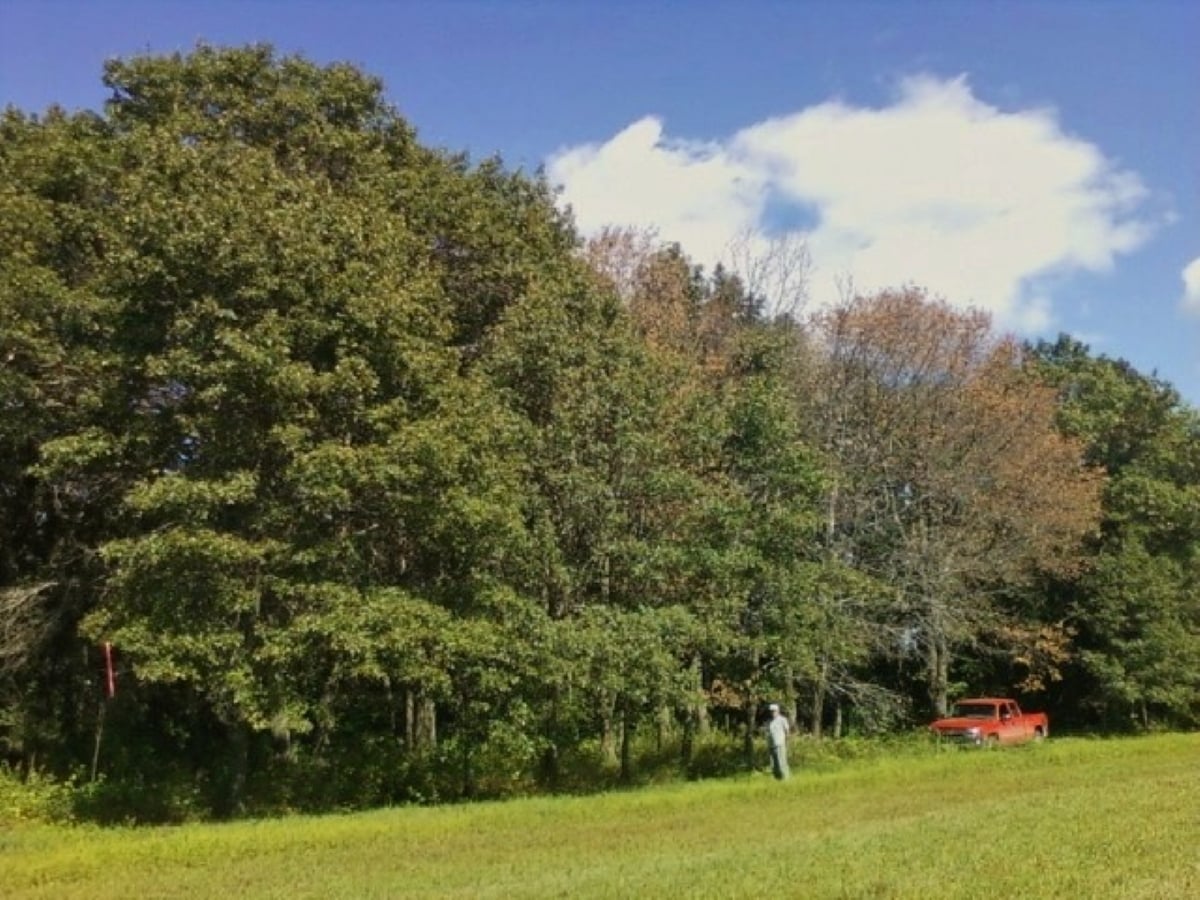
When it comes to trees, we know there are many issues that can cause alarm - from diseases to pests, it’s important to keep an eye on the various health signs your tree can display. Oak Wilt Disease is one of the more dangerous diseases out there, as it can rapidly deteriorate the health of oak trees and ultimately kill affected hosts. Luckily, the fungus that causes Oak Wilt Disease, Bretziella fagacearum, has not yet been detected in the Seacoast Region.
The key word above, however, is “yet” - while the fungus has not been found in New England as of this writing, it is present in areas of New York and will eventually find its way into our region, making it critical to stay vigilant for signs of Oak Wilt. Wilting, discolored, or prematurely falling leaves are among the symptoms of this disease, but it’s best to work with a Certified Arborist to ensure proper diagnosis.
In this guide, we’ll explain further how to identify Oak Wilt, how it spreads, steps that can help prevent it, and what to do if you suspect an oak tree may be infected.
Jump To:
What is Oak Wilt Disease?
Is Oak Wilt Common in New England?
What Does Oak Wilt Look Like?
How Oak Wilt Spreads
Oak Wilt vs Other Oak Tree Diseases
Preventing Oak Wilt on New England Trees
Oak Wilt Treatment Options
FAQs on Oak Wilt Disease
How a Certified Arborist Can Help Protect Your Oak Trees
What is Oak Wilt Disease?
Oak Wilt Disease is a fast-moving oak tree fungus that can affect all species of Quercus (the scientific name for trees in the oak family). As the name implies, this fungus causes rapid wilting, premature leaf drop, discolored leaves, and sometimes even vascular streaking.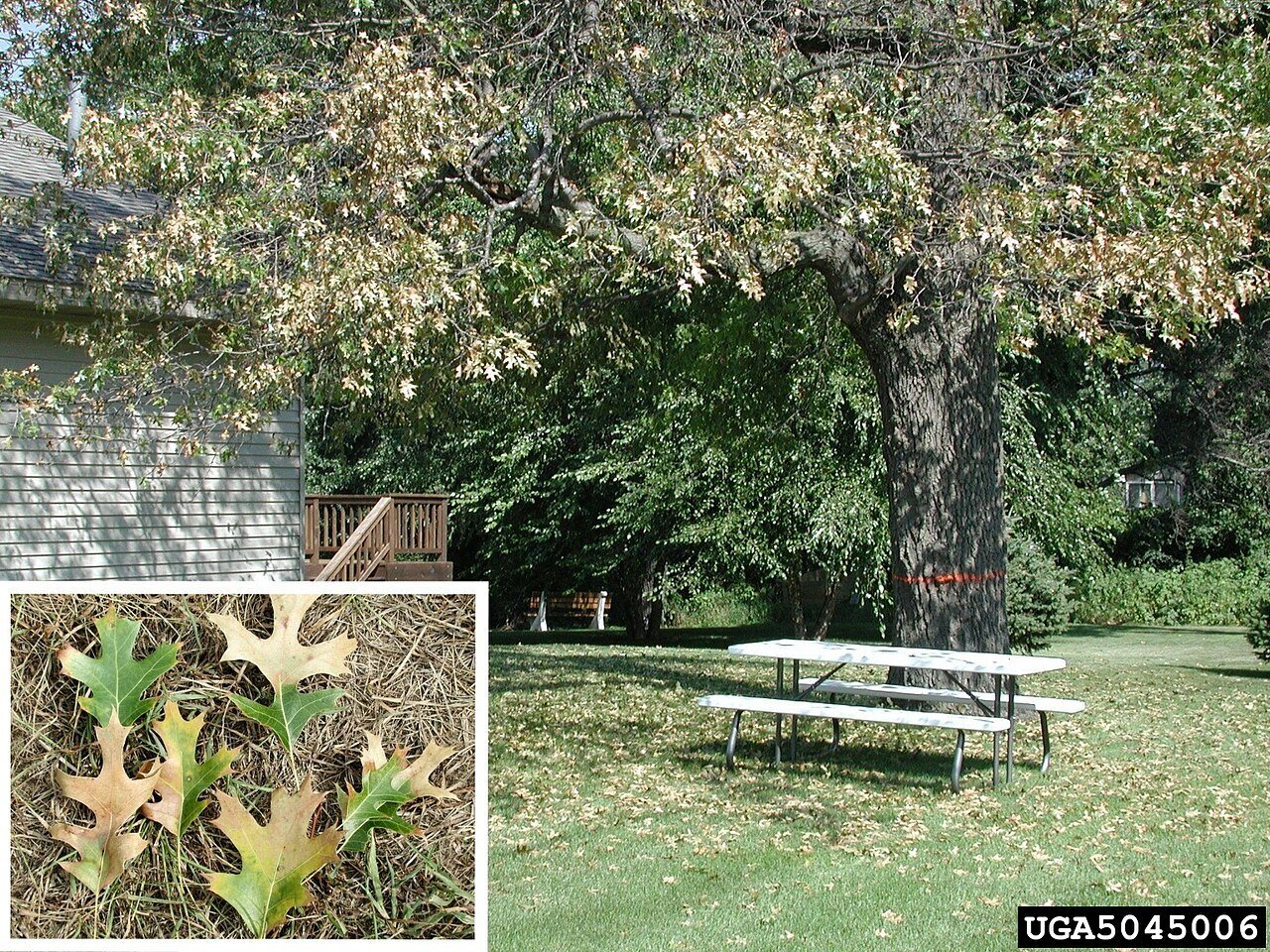
This disease is aggressive and can be deadly as it will eventually block the movement of water through the tree.
Is Oak Wilt Common in New England?
The good news is that we are not yet seeing Oak Wilt Disease in our area of New England. But arborists have been keeping a close watch as it has become increasingly common in neighboring regions, including New York. In time, we do expect to see Oak Wilt here.
The highly aggressive nature of the disease puts the threat level as elevated, even though it has not been detected. It is something that our arborists actively watch for signs of.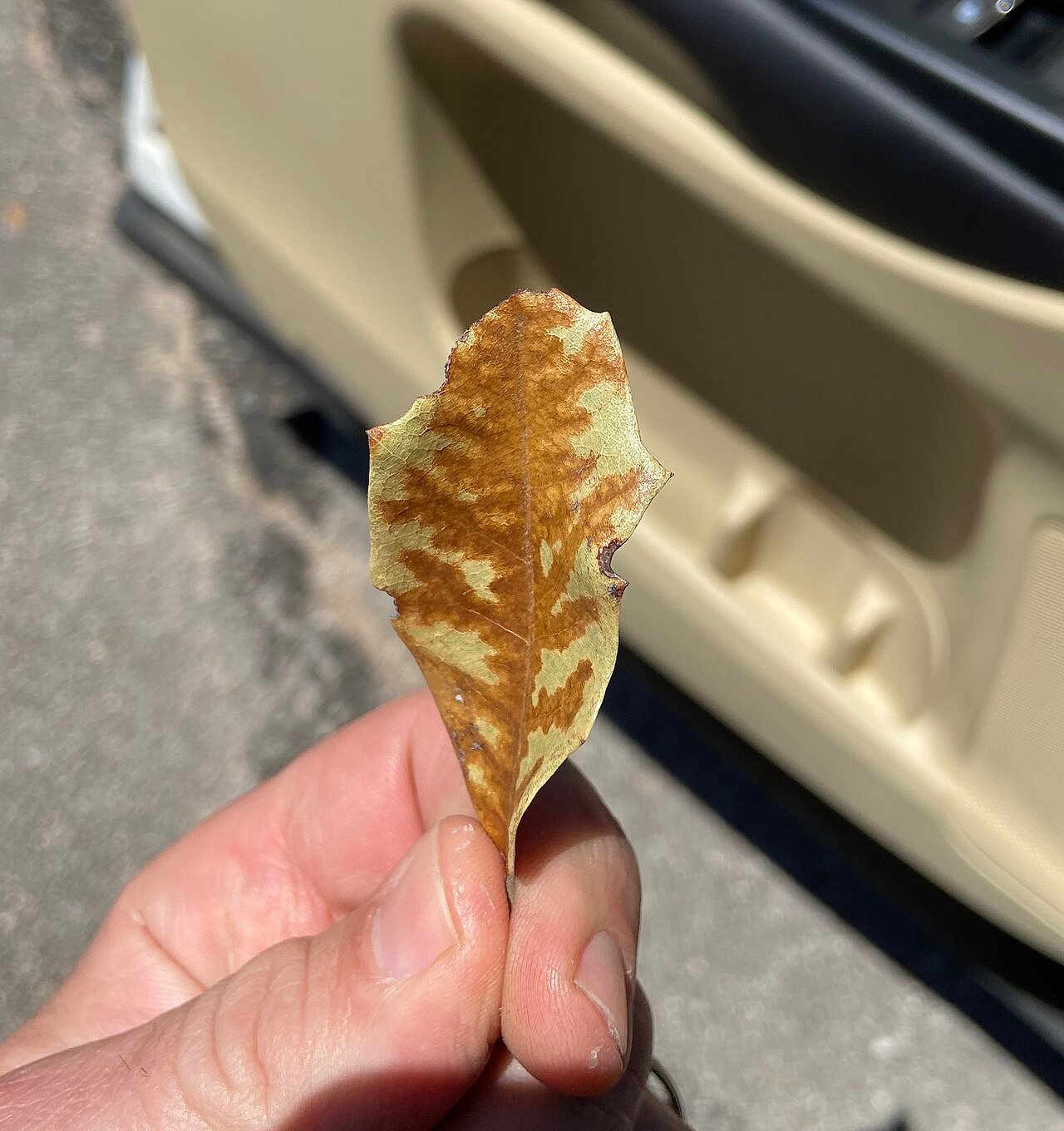
What Does Oak Wilt Look Like?
There are a few signs of Oak Wilt Disease that are typically noted on infected trees. These include:
-
Wilt: Wilting is probably the most common symptom, hence the name of this disease. Wilt starts in the upper canopy and damage will move down through the tree. Look for limp, droopy, or soft leaves that hang downward and curl inward at the edges.
-
Premature leaf drop: Leaves will drop while still green, often in the middle of the summer.
-
Discoloration: Leaves might turn pale green, bronze, or yellow, often starting at the margin and moving to the interior. This can be a sign of other diseases, so be sure to consult with an arborist before assuming you’re dealing with Oak Wilt Disease.
How Oak Wilt Spreads
There are two primary ways that Oak Wilt spreads. This oak tree fungus can spread via sap-feeding pests which carry the fungal spores to tree wounds.
It can also spread via underground root systems from a sick tree to a neighboring healthy tree. This can create expanding patches of infected trees in densely forested areas.
Oak Wilt Disease can spread rapidly and has the potential to kill a tree in a matter of weeks.
Oak Wilt vs Other Oak Tree Diseases
Oak Wilt is not the only disease that impacts oak trees. Other common diseases include Anthracnose, Bacterial Leaf Scorch, and Powdery Mildew.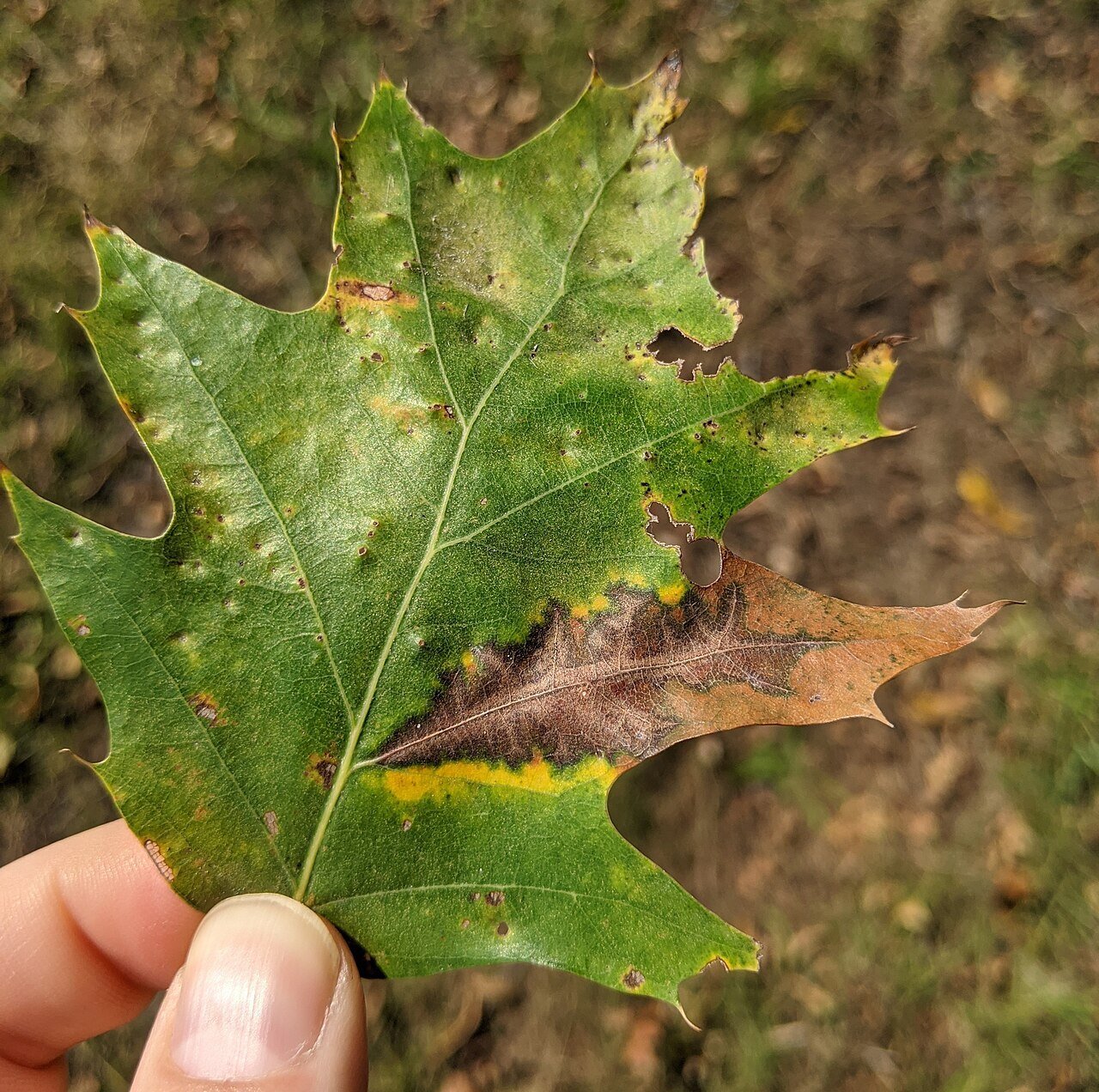
Keep in mind that just because leaves are wilting and turning brown does not mean that your tree has Oak Wilt Disease. Other diseases can look similar and even drought stress can lead to this symptom.
Make sure that proper oak tree fungus identification is made before any next steps are taken.
Preventing Oak Wilt on New England Trees
Right now we are on high alert, but not currently experiencing problems with Oak Tree Wilt. Protecting New England oak trees is important, as they make up a large portion of the tree population across our region. Here are some steps that you can take.
-
Avoid pruning during the high risk season: If Oak Wilt does move into our region, then it might make sense to avoid pruning during the high risk months (approximately April through July). This is when sap-feeding beetles can transmit active disease.
-
Don't bring oak firewood from infected areas to your yard: Infected oak logs can transport the Oak Wilt fungus. Buy local firewood and avoid moving it across regions, especially areas with a known Oak Wilt Disease presence.
-
Keep trees healthy: Maintaining good tree health in general is always important. Proper pruning and overall good tree care habits is essential. If trees do develop wounds (such as from storm damage), talk to a Certified Arborist about how to handle them in order to reduce exposure to various diseases.
Oak Wilt Treatment Options
There is no simple cure for Oak Wilt, which is what makes this disease serious. The truth is, it’s often not possible to save a tree from Oak Wilt, making it more important to prevent the disease from spreading to other Oaks in the area. This might mean proper tree removal is necessary.
Before determining the best course of action, a proper diagnosis will need to be made. If Oak Wilt is suspected, a sample will be sent out to the lab for verification. Then, decisions can be made accordingly and in consultation with your arborist.
FAQs on Oak Wilt Disease
What are the early signs of Oak Wilt?
The earliest signs of Oak Wilt Disease is usually wilting near the top or outer crown. The rest of the tree might still look healthy, but this disease can spread rapidly.
Do I need to cut down oak wilt trees?
If it is confirmed that your tree truly has Oak Wilt, most times it cannot be saved and it may need to be removed. But make sure to consult with a Certified Arborist to determine what is going on and how to handle it. There are many diseases and other problems that can look like Oak Wilt but can be handled without tree removal.
What causes Oak Wilt?
Oak Wilt is caused by a fungus known as Bretziella fagacearum. It can get into a tree via sap-feeding pests or through interconnected root systems.
Can Oak Wilt affect other types of trees besides oaks?
Oak Wilt is not considered a threat to other tree species. This disease is most dangerous to Red Oaks, followed by White Oaks.
How a Certified Arborist Can Help Protect Your Oak Trees
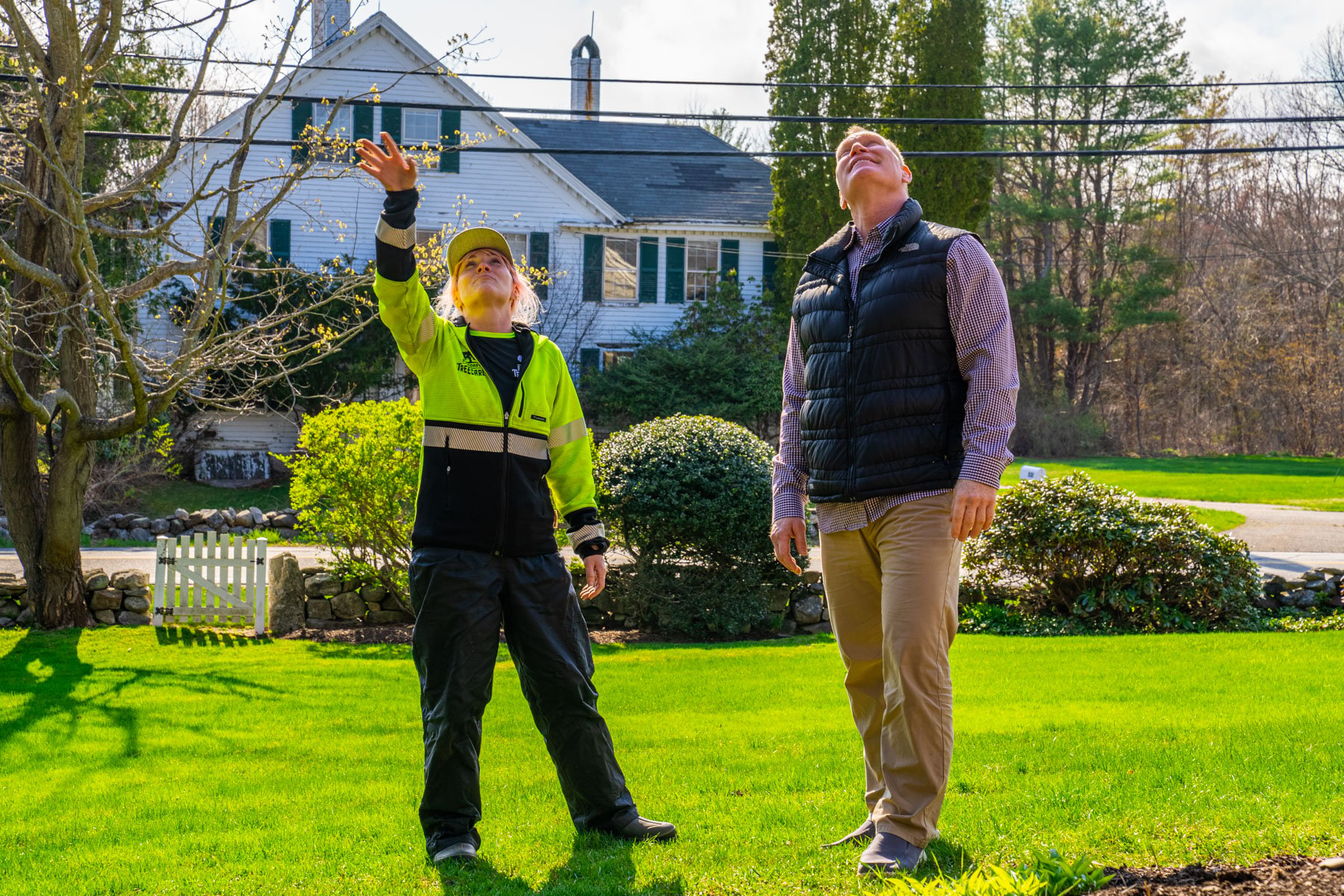
Any time that you are unsure about what’s going on with your tree, it can be helpful to bring in a professional. Tree diseases can be difficult to identify accurately, especially since many symptoms overlap with pest issues or environmental stress. Treating the wrong problem can lead to unnecessary costs and further damage.
A Certified Arborist can also play an important role in helping you to maintain your tree’s health and prevent a lot of problems in the first place.
At Seacoast Tree Care, we help homeowners across Southern New Hampshire, Northeastern Massachusetts, and Southern Maine diagnose and manage tree health issues with confidence.
Whether you’re dealing with a suspected disease or just want peace of mind, our team can evaluate your trees and recommend the best next steps.
Ready to get expert answers about your trees? Request your consultation today and let’s make sure your landscape stays healthy and safe.
Image Sources: oak wilt forest edge, oak wilt symptoms, oak wilt affected leaf, oak leaf affected by anthracnose