
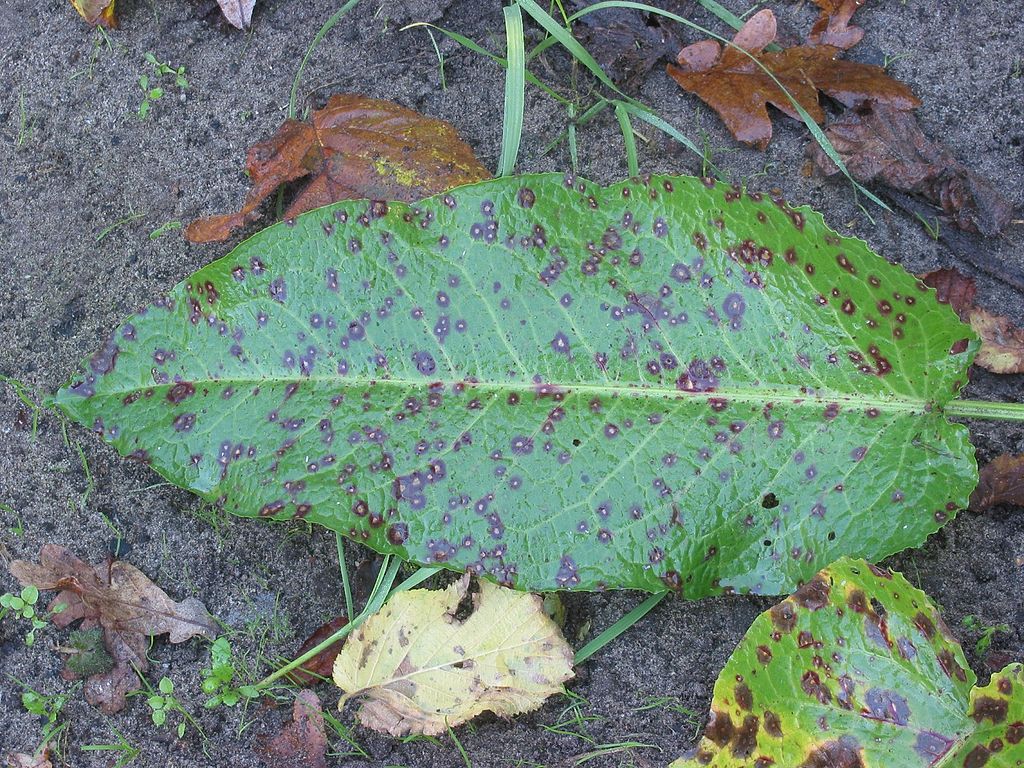
Are you seeing spots? Finding spots on leaves in your landscape’s trees can be alarming. In fact, “Leaf Spot” is one of the most common reasons why homeowners in New England start to worry about their tree health.
But here’s where it gets tricky - Leaf Spot isn’t just one specific disease. It’s a general term used to describe a variety of issues that can cause spotting and discoloration on leaves. While people commonly use Leaf Spot disease as an all-encompassing term, there could be more than one potential cause.
In this article, we’ll talk about what you should do if you find spots on leaves in your trees.
Jump To:
What is Leaf Spot Disease?
What Kinds of Spots on Tree Leaves Should You Look Out For?
Bacterial vs Fungal Leaf Spot: What’s the Difference?
What Causes Leaf Spot to Develop and Spread?
How to Prevent Leaf Spot Disease on Your New England Trees
Does Leaf Spot Disease Require Treatment?
When Should You Call a Tree Care Professional?
FAQs on Leaf Spot Disease
Choosing Seacoast Tree Care for All of Your Tree Care Needs
What is Leaf Spot Disease?
Leaf Spot disease is just a general term used for a group of plant diseases that leave spots on leaves.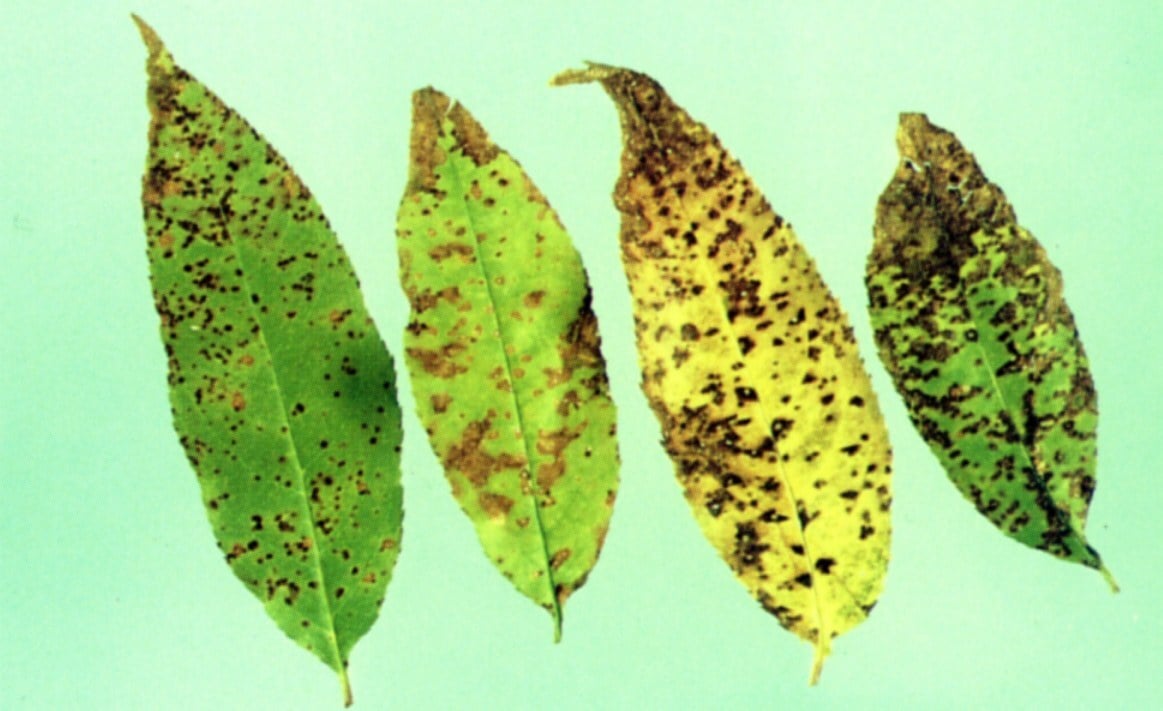
Some of the typical signs that you might notice include:
- Discolored spots (brown, black, or reddish) on leaves
- Yellowing around affected areas
- Premature leaf drop
- Spots with dark borders or rings
These spots can be caused by different pathogens but it tends to occur when foliage stays wet for extended periods. That’s because it’s commonly caused by fungus (but not always!).
Leaf Spot typically starts out as an aesthetic concern, but infections can spread and can cause stress over time.
What Kinds of Spots on Tree Leaves Should You Look Out For?
If you see spots on leaves in your trees, it’s going to automatically raise a red flag. But keep in mind that not every spot indicates your tree has a disease. Spots can be part of the natural aging process. Sun exposure can also burn leaves and cause browning or bleaching that shows up like spots.
Believe it or not, water stress can also lead to spots on leaves. Drought conditions can produce brown patches that look like spots at times. Insect damage can also sometimes show up as spot-like patches. And some natural leaf markings have speckles that are simply part of their appearance.
A clue that something is actually wrong is spots that are spreading or accompanied by other problems, such as premature leaf drop. That’s going to indicate these are spots to be concerned about.
Some common warning signs of leaf spot diseases include:
- Brown or tan spots that keep growing larger
- Black or dark spots, with or without a border
- Yellow spots
- Red, orange, or purple spots, particularly on ornamentals
- Spots with rings or borders
- Spots with irregular edges
- Tiny black dots instead of the spots (usually indicating fungus)
- Premature leaf drop
Bacterial vs Fungal Leaf Spot: What’s the Difference?
As we mentioned, one of the things that make “Leaf Spot” complicated is the fact that different pathogens can cause it. Both Bacterial Leaf Spot and Fungal Leaf Spot can look quite similar and it would be hard for a homeowner to tell them apart simply by looking.
But here are a few potential clues.
Bacterial Leaf Spot
With Bacterial Leaf Spot the edges of the spots tend to be less defined. This disease is usually associated with wet conditions and splashing water, as it is spread this way. Tissue may look water-soaked or even “greasy.” Leaves may have this wet look before actually developing any spots.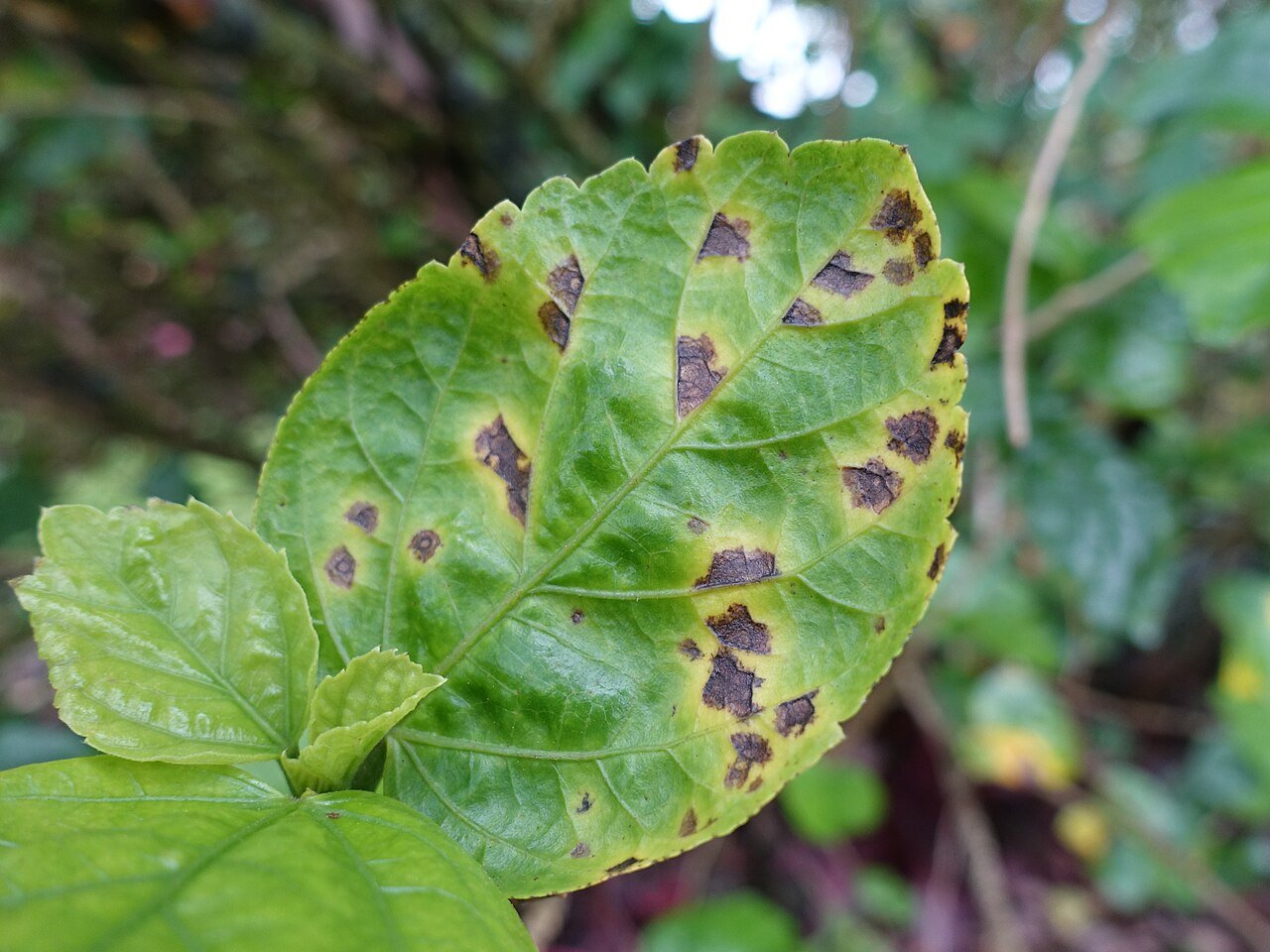
Fungal Leaf Spot
Fungal Leaf Spot tends to have round or irregular spots, often with defined borders. They sometimes have edges that are darker. Fungus tends to spread during warm, humid conditions and prolonged leaf wetness.
While these types of Leaf Spot do look quite similar, and symptoms can overlap, they have different treatments. That’s why proper identification is critical.
What Causes Leaf Spot to Develop and Spread?
Leaf Spot develops and spreads when a susceptible plant, a pathogen (fungus or bacteria), and favorable environmental conditions all align. There are certain conditions that can make Leaf Spot disease more likely to occur:
- Prolonged leaf wetness: Rain, irrigation, and humidity can all cause leaves to stay wet longer than they ought to. One poor cultural practice that can cause this is watering from the top. When watering trees, it should be performed at the base.
- Lack of air circulation: A dense canopy is going to have less air circulation, which can prevent foliage from drying out. Proper pruning is one solution that can help remedy this.
- Stressed trees: Trees that are already in poor health are going to be more prone to problems like Leaf Spot. Drought, poor nutrition, and other environmental stressors can make your trees vulnerable.
Once established on your property, pathogens can move through means like rain, wind, insects, and even contaminated tools.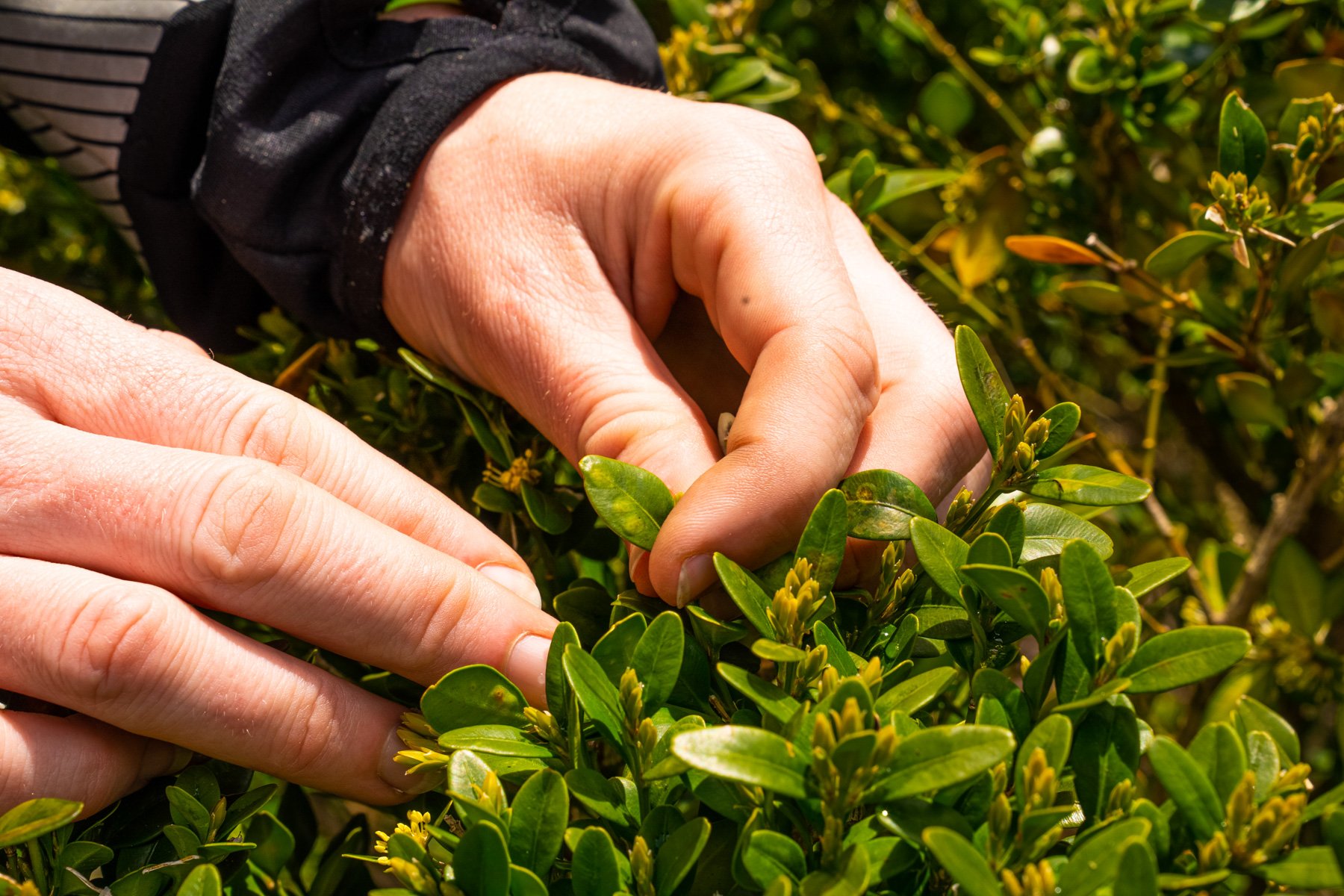
How to Prevent Leaf Spot Disease on Your New England Trees
Preventing Leaf Spot is largely about reducing the conditions that allow the pathogens to establish and spread. Improving air circulation (through pruning), watering at the soil level, and watering properly (soil shouldn’t be excessively soggy), can all help.
Proper pruning definitely plays a valuable role in disease management as infected limbs should be strategically removed and properly discarded.
Strategically cutting infected branches (below the infection), can stop the spread of pathogens to the rest of the tree.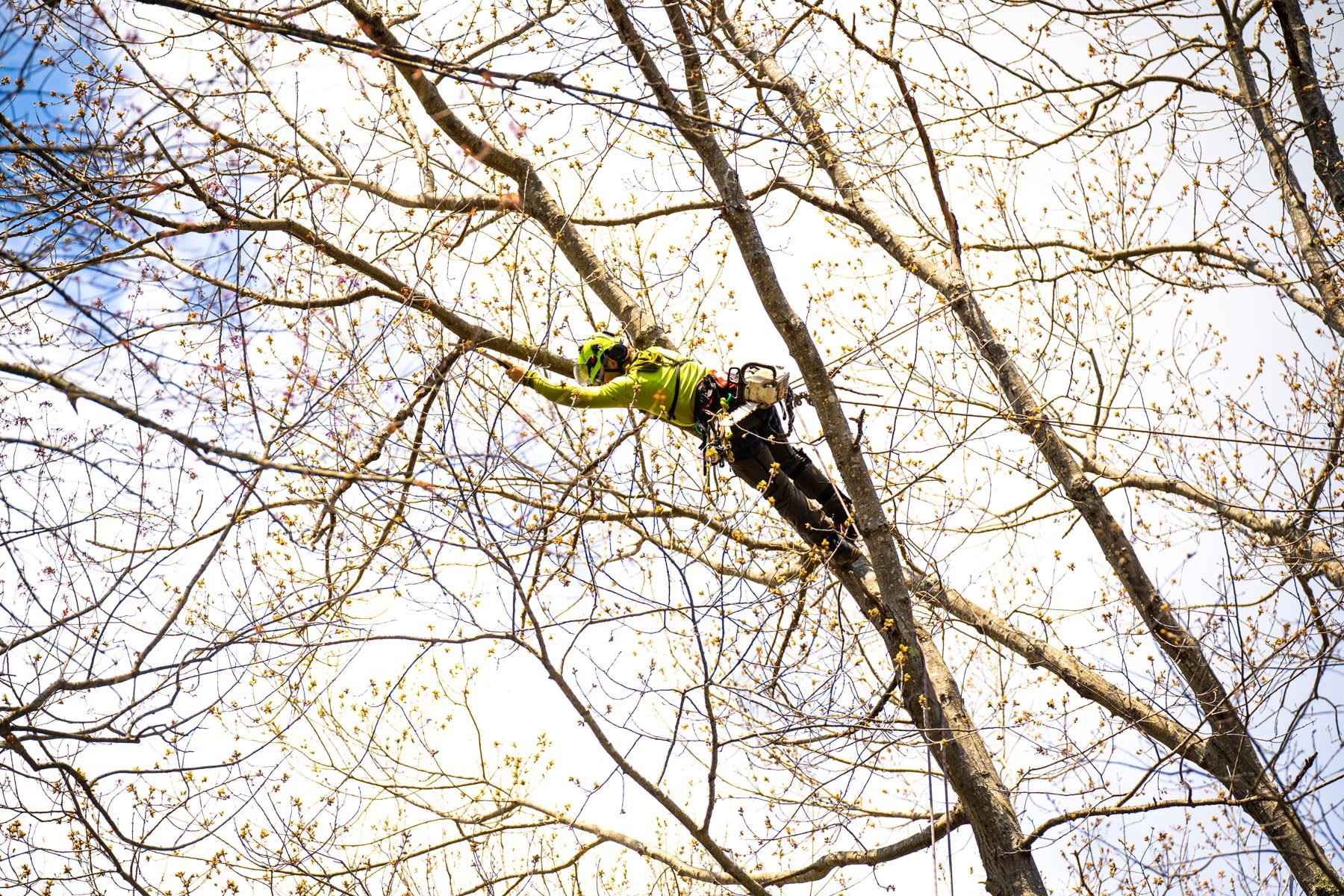
Since pruning also boosts overall tree health by allowing the tree to focus its energy on healthy limbs, the process makes the tree more stable. This further improves its ability to fight off disease in the future as well.
Does Leaf Spot Disease Require Treatment?
Leaf Spot does not always require treatment.
In many cases, improving tree health and monitoring the issue may be enough, particularly if symptoms are not severe.
But if the problem continues to spread or worsens over time, it’s important to identify the exact cause before taking action. If the disease is spreading rapidly or infecting large portions of the tree, that’s a problem. Premature leaf drop is also a red flag that the issue is more serious.
Leaf Spot disease treatment options will depend heavily on whether you’re dealing with fungal or bacterial leaf spot. Or, if it’s determined the spots on leaves are something else entirely (like pests or watering issues), there could be different courses of action.
When Should You Call a Tree Care Professional?
Any time that you’re dealing with tree issues, it’s worth calling in an expert for their diagnostic advice. Trees can be complicated. Not only are there many different tree diseases (and many of the symptoms mimic one another), but there are quite a few other problems that can arise.
Ultimately, you want to find a company that has your best interest at heart and that you can build a long-term relationship with. Your property requires ongoing care and it’d be great to partner with a company that you truly trust to deliver the best service and results.
By choosing to work with a tree care professional that has significant experience, training, and skill (including horticultural expertise), you can feel confident that the best decisions are being made for your trees.
Frequently Asked Questions About Leaf Spot Disease
Should I remove and dispose of leaves affected by Leaf Spot?
Yes, you will need to remove and dispose of leaves that are affected by Leaf Spot, assuming it’s truly a disease causing the spots and not another issue like a problem. This can be done by a professional using proper pruning techniques. Sanitary disposal will be critical to avoid spreading the disease.
Can a tree recover after losing leaves from Leaf Spot disease?
Yes, trees will often recover after losing leaves to Leaf Spot disease. Of course, as with any disease, it’s going to depend on the severity and the tree’s overall health.
Does Leaf Spot disease come back every year?
Leaf Spot can return. Recurrence usually depends on the specific pathogen, the tree species, and whether the conditions are favorable. Since pathogens can overwinter in infected fallen leaves, it’s really important to perform proper leaf removal. Proper pruning will play a huge role in disease management.
Can Leaf Spot disease affect newly planted or young trees differently than mature trees?
Newly planted or young trees are more vulnerable to disease in general. Young trees are often already dealing with transplant stress and a disease like Leaf Spot can add to that stress.
Can Leaf Spot disease be confused with insect damage or drought stress?
Yes, to the untrained eye, Leaf Spot is very commonly confused with damage from insects or drought stress. It’s always beneficial to bring in a Certified Arborist to help you get a proper diagnosis.
Choosing Seacoast Tree Care for All of Your Tree Care Needs
We know that tree problems can be stressful, but we’re here to help. At Seacoast Tree Care, we help homeowners across Southern New Hampshire, Northeastern Massachusetts, and Southern Maine diagnose and manage tree health issues with confidence.
By choosing plant health care in Southern NH, Northeastern MA, and Southern ME, you can implement treatments that will help keep trees healthy. But part of that program is also diagnosing and treating issues that arise (like disease and pests). We can also prune trees to help maintain their health and control disease spread.
Whether you’re dealing with a suspected disease or just want peace of mind, our team can evaluate your trees and recommend the best next steps. Ready to get expert answers about your trees? Request your consultation today and let’s make sure your landscape stays healthy and safe.
Image Sources: leaf spot, various leaf spot appearances, bacterial leaf spot