

If you have maple trees on your New England property, you might be worried about sooty bark disease. We understand that your trees are important to you and that you don’t want anything to happen to them.
Sooty bark disease is a fungal disease that primarily infects Maples and can potentially lead to serious damage.
In this article, we’ll dive into everything that you ought to know about this tree bark disease so that you can make the best choices for your Seacoast property.
Jump to:
What Does Sooty Bark Disease Look Like on New England Maple Trees?
Why Are Maple Trees the Primary Target for Sooty Bark Disease?
Is Sooty Bark Disease a Concern for Maple Trees Throughout the Seacoast Region?
Can a Tree with Sooty Bark Disease Be Saved?
How is Sooty Bark Disease Treated?
What Should You Do if You Find Fungus or Unusual Bark on a Maple Tree?
Frequently Asked Questions About Sooty Bark Disease
When to Get Professional Plant Health Care in Southern NH, Northeastern MA, and Southern ME
What is Sooty Bark Disease?
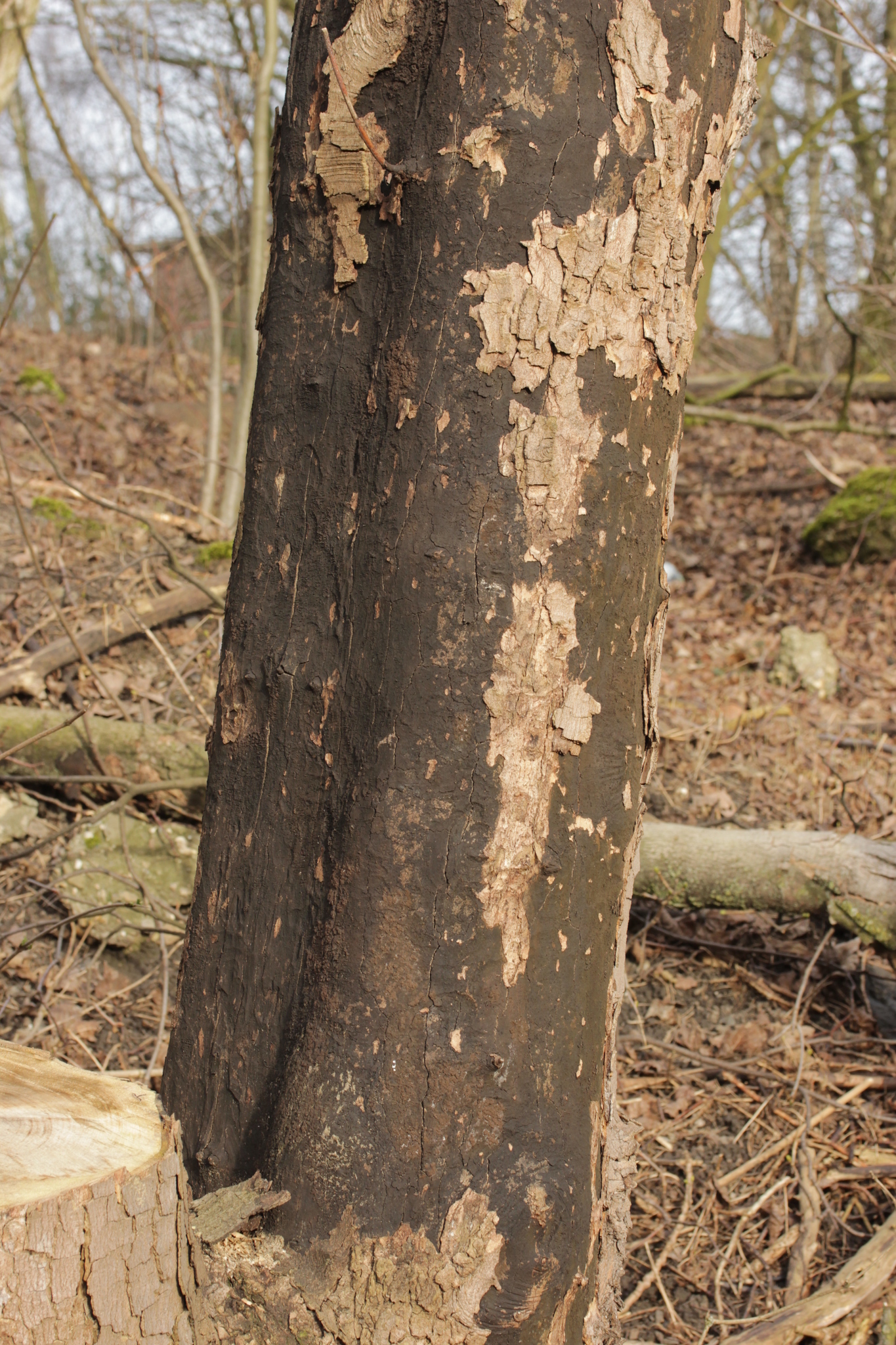
Sooty bark disease is a fungal disease that feeds on and colonizes the tree’s wood and tissues. This fungus (Cryptostroma corticale, if you want to get scientific) spreads through the sapwood and eventually into the tree’s tissues.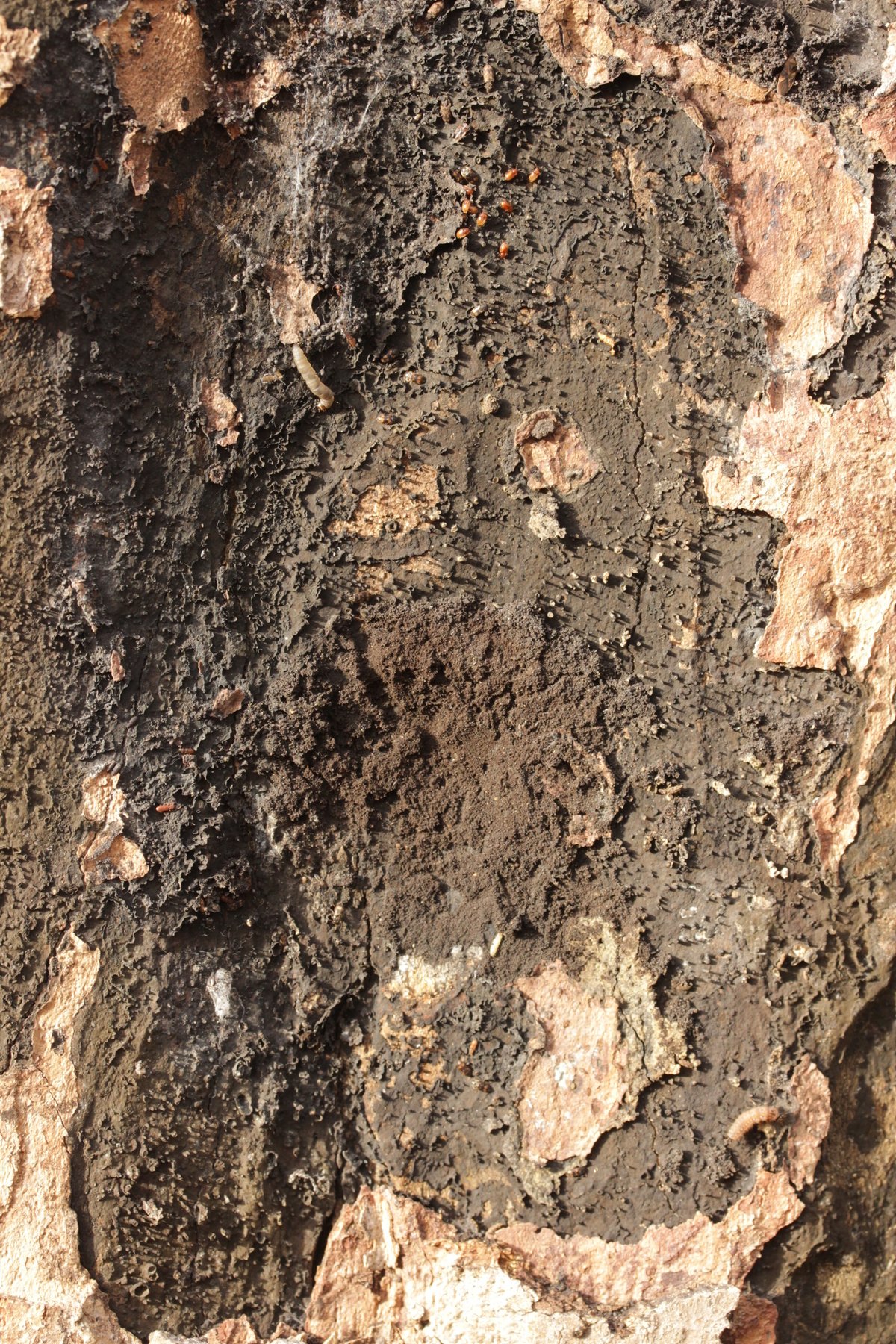
This is often confused with Sooty mold, which is also common in our region but is caused by a different group of fungi that feeds on sugary honeydew produced by sap-feeding insects (like scale or aphids).
Sooty bark disease primarily affects maple trees because the fungus that causes it is well-adapted to colonizing maple wood. This can include the Red Maple, Sugar Maple, Silver Maple, and more.
What Does Sooty Bark Disease Look Like on New England Maple Trees?
This Maple tree fungus is usually most recognizable by its dark, soot-like patches (hence the name!). It is generally also accompanied by branch dieback and peeling or splitting bark.
While sooty bark disease infects the tree itself, sooty mold grows on the surface of leaves and branches. But both can make a tree look dark or black.
Why Are Maple Trees the Primary Target for Sooty Bark Disease?
The main reason why Maple trees make a strong target for sooty bark disease is simply because maple wood provides an environment where the fungus is especially good at surviving and growing. Similar to how some plants grow better in different types of soil, Cryptostroma corticale thrives in maple wood.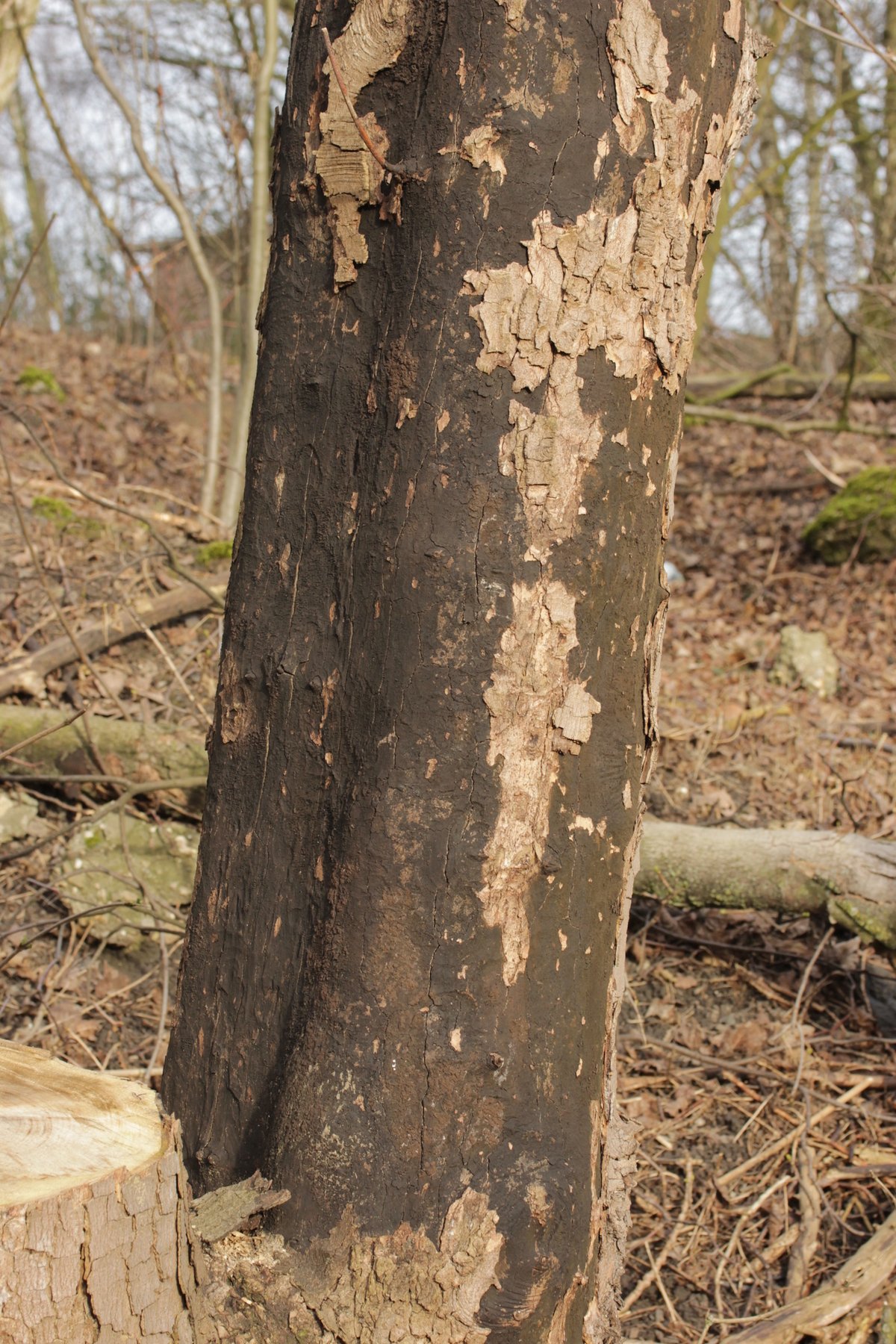
It’s a misconception that this Maple tree bark disease only seeks out unhealthy Maples. Healthy maple trees can also be infected. However, Maples that are already experiencing heat or drought stress are generally more likely to develop a severe case of the disease.
Is Sooty Bark Disease a Concern for Maple Trees Throughout the Seacoast Region?
While we do see cases of sooty bark disease, and sooty mold, it’s not a widespread problem. However, Maple trees are found in abundance in New England, so it’s something that homeowners should keep on their radar.
Favorable weather conditions can always increase the risk. Hot and dry summers can stress Maple trees and also create conditions that make fungus development more likely. While most fungal growth is associated with damp and wet conditions, sooty bark disease is unique in that it is strongly associated with hot and dry weather.
But remember that the fungus (Cryptostroma corticale) has to be present for the disease to occur. Just because we’re experiencing hot and dry weather does not automatically mean your tree is going to get this disease.
Can a Tree with Sooty Bark Disease Be Saved?
Yes, a tree with sooty bark disease can survive but it will depend on how far the disease has progressed and how severely the tree is infected.
There are currently no curative treatments for this disease. However, not every infected tree is going to die or require tree removal.
If you suspect your tree might have sooty bark disease you’ll want to call a Certified Arborist for an assessment. They will determine how much of the tree is affected and whether it is structurally compromised.
Reducing stress, such as watering a drought-stressed tree, might play a role in restoring its overall health. But let an expert help guide you with those decisions. Watering can actually make things worse for other types of fungal infections.
How is Sooty Bark Disease Treated?
Since there is no cure for sooty bark disease the next steps involve management. If the infection is limited to certain branches, a Certified Arborist may advise removing them. This can help preserve the tree’s overall health.
If the disease is severe, it’s possible that tree removal might be warranted. But it’s often common to monitor a tree for several years before making that decision. A Certified Arborist can watch how the tree’s health progresses and determine whether it’s going to pose a safety risk. Often, homeowners take great pride in their Maples and these trees are highly valued.
What Should You Do if You Find Fungus or Unusual Bark on a Maple Tree?
It is always best to call a Certified Arborist if you find anything suspicious on your trees. There is certainly more than one kind of Maple tree fungus in New England and a proper diagnosis will be key.
A Certified Arborist can come out, make a diagnosis, and recommend next steps that you should take. At Seacoast Tree Care, we take great pride in partnering with homeowners to care for their trees.
FAQs
Can sooty bark disease be harmful to humans or pets?
Sooty bark disease can potentially pose a threat if airborne fungal spores are inhaled. This is primarily a concern for susceptible individuals, such as those with asthma. But it’s an important reason to leave any infected bark alone and call a Certified Arborist.
Will sooty bark disease spread from one maple tree to another?
Yes, sooty bark disease does have the potential to spread from one Maple to another. The fungal spores can become airborne and be carried on the wind.
What other diseases can cause black bark on trees?
Sooty bark disease is just one potential cause of black bark on trees. Sooty mold is another common culprit that we see here in New England. There are also black/oozing cankers that can form on trees and make the bark appear black.
Should fallen bark or wood from an infected tree be removed from my property?
Yes, fallen bark from a tree with confirmed sooty bark disease should be removed since it contains spores that can become airborne. It’s important that removal is handled carefully.
How can I reduce stress on Maple trees during hot, dry New England summers?
Reducing stress on your Maples can play an important role in disease reduction. The best way to reduce stress during periods of hot and dry weather is to keep the trees properly watered. Investing in a professional Plant Health Care program can also help maintain tree health.
When to Get Professional Plant Health Care in Southern NH, Northeastern MA, and Southern ME
The key to protecting your landscape is understanding exactly what you’re dealing with. That’s why if you’re noticing anything unusual with your trees, such as bark turning black, you’ll want to call a professional.
A Certified Arborist can help you make a proper diagnosis and determine the next best steps.
At Seacoast Tree Care, we help homeowners across Southern New Hampshire, Northeastern Massachusetts, and Southern Maine diagnose and manage tree health issues with confidence.
Whether you’re dealing with a suspected disease or just want peace of mind, our team can evaluate your trees and make valuable recommendations.
Ready to get expert answers about your trees? Request your consultation today and let’s make sure your landscape stays healthy and safe.
Image Sources: sooty bark disease close up, sooty bark on maple tree