

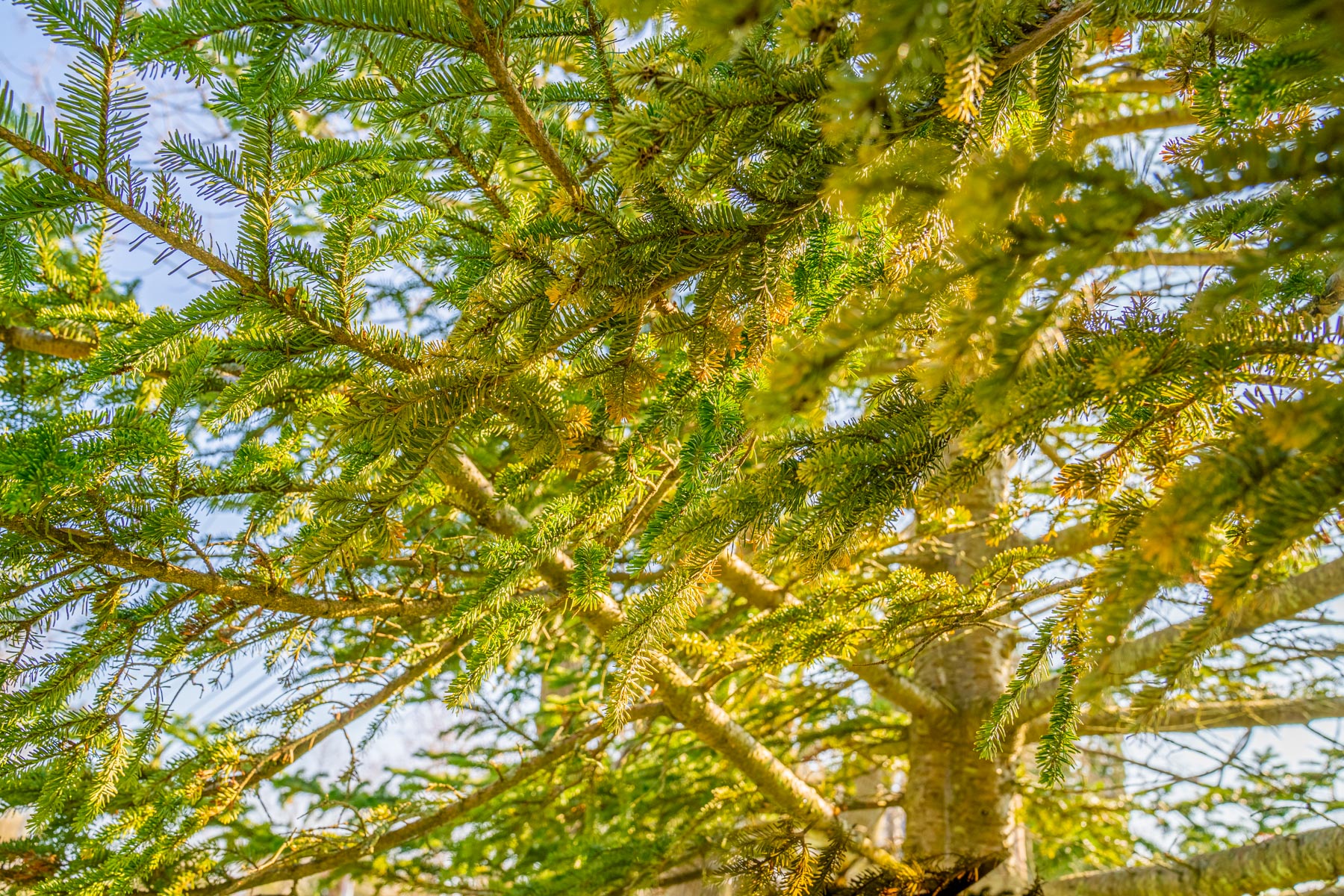
There are many types of evergreen trees located in New England. These trees are a popular choice for year-round color and interest, privacy screening, wind breaking, and more. It’s a hardy plant choice that is well-adapted to our significant variations in climate, including our harsh winter conditions.
If you have one or more of these trees in your yard, you might be wondering what type of evergreen tree you have growing. Evergreen tree identification can help ensure that you’re making the best choices for the species in your yard. This article will review some tips to help with identifying the evergreens on your property - when in doubt, reach out to your local Certified Arborist for help.
Jump to:
Types of Evergreen Trees in New England
Evergreen Tree Identification
Signs of Evergreen Problems
Choosing Tree Care in Southern NH, Northeastern Massachusetts, and Southern Maine
Types of Evergreen Trees in New England
Common New England evergreens include conifers like Spruce, Fir, Arborvitae, Pine, and Juniper as well as broadleaf species like Holly, Boxwood, and Rhododendron.
Let’s talk about these evergreen tree types and what you can expect out of them.
Spruce Trees
New England is home to native Spruce tree types including the Red Spruce and the White Spruce. Norway Spruces also thrive in New England yards. In general, Spruce Trees offer year-round interest, wind and privacy screening, and lots of versatility. Like other evergreen tree types, the Spruce is also a low maintenance choice.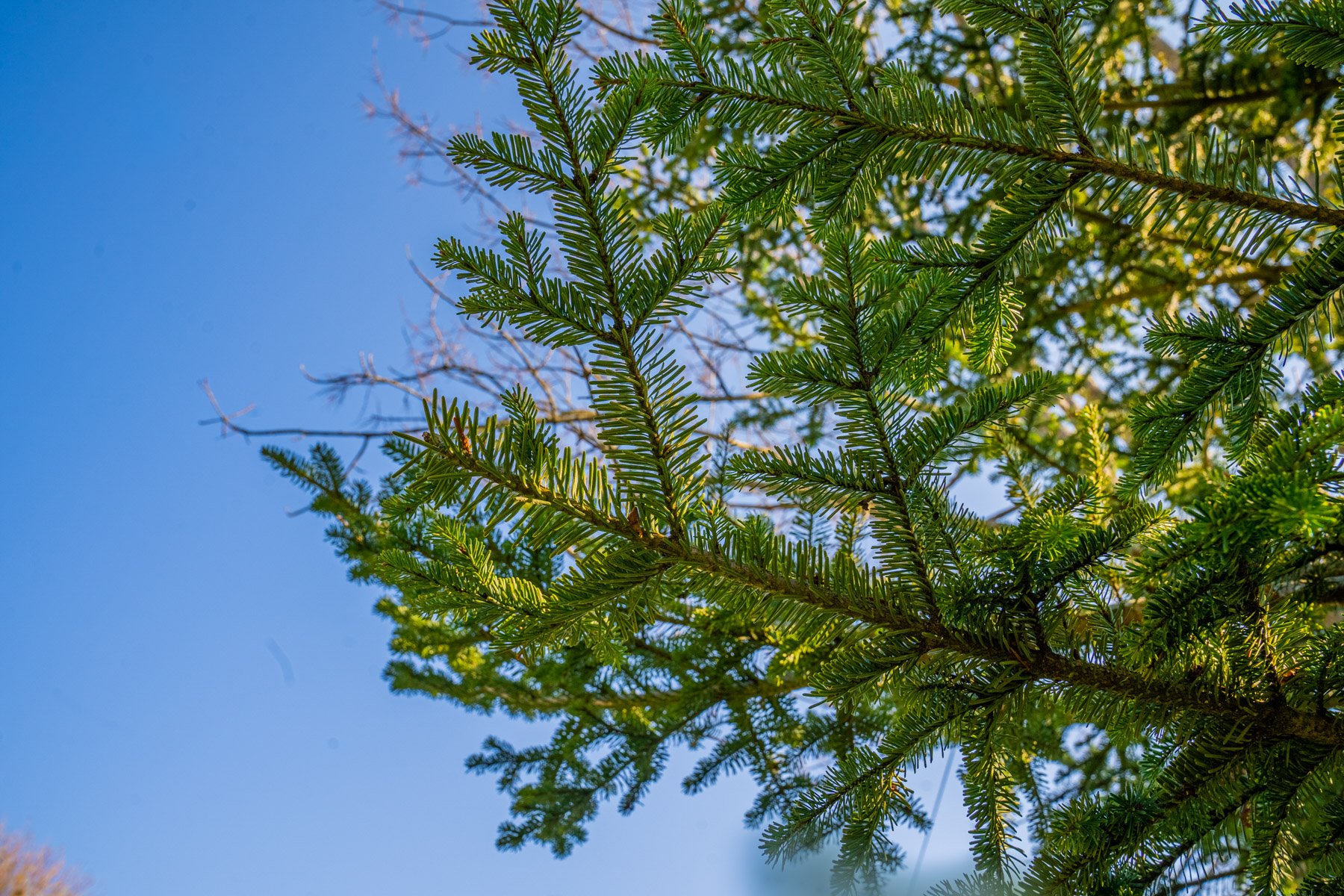
Fir Trees
While there are various types of Fir trees, the Balsam Fir is probably the most popular choice for New England yards. It performs well in the Seacoast region where it can grow in our acidic soils. It has a compact shape and dense needles, helping it to survive even in windy and salty environments.
Pine Trees
In New England, some of the popular Pine Tree types include the Eastern White Pine (which is fast-growing with soft needles) and the smaller Mugo Pine, for smaller spaces.
The Scots Pine can also be a good choice for New England yards, offering tough and adaptable growth. The Scots Pine is known for its bluish-green needles and is also a conifer type that is sold as a Christmas Tree.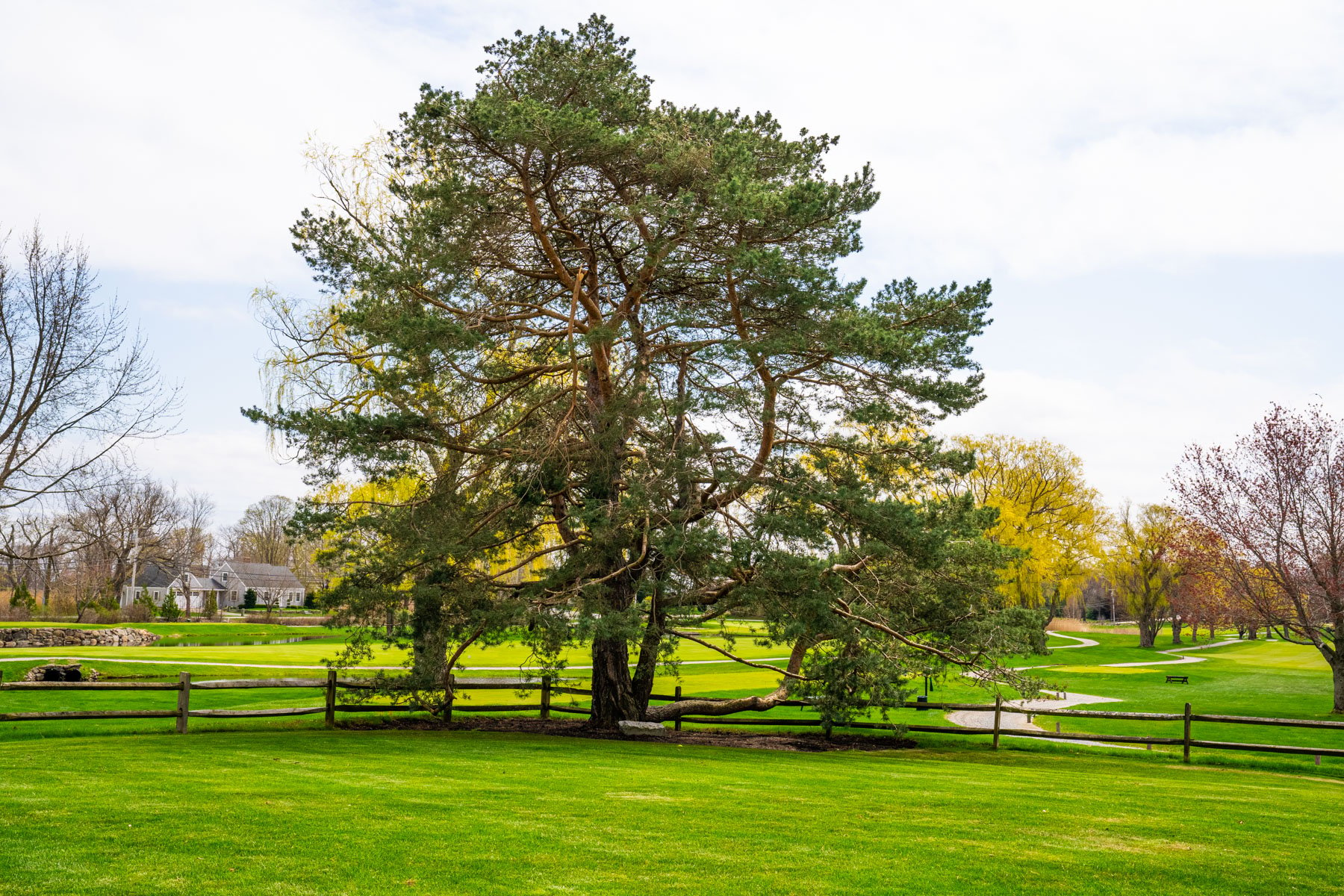
Juniper Trees
Junipers can also make a great evergreen choice for New England yards. The Eastern Red Cedar is a hardy choice that thrives in full sun and can withstand poor soil conditions. The Common Juniper is another popular option.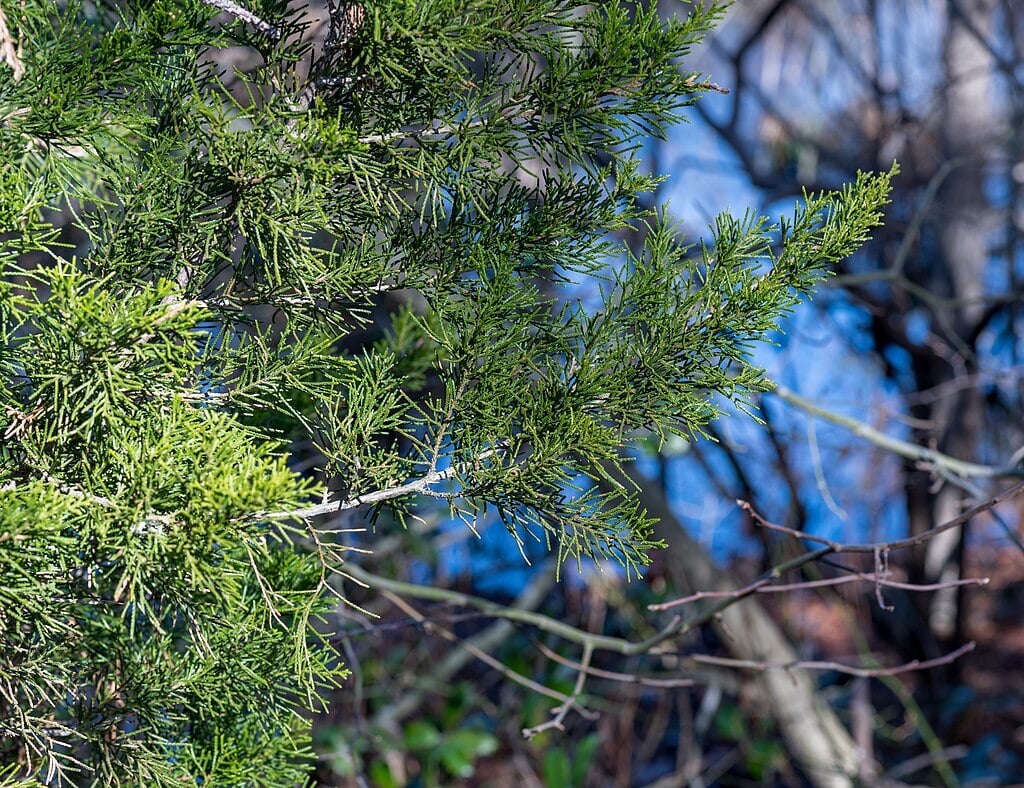
Holly
Hollies are a nice broadleaf type of evergreen that can make a good choice for your New England yard. Hollies do tend to prefer acidic, well-drained soil. The American Holly and the Inkberry Holly are two popular species.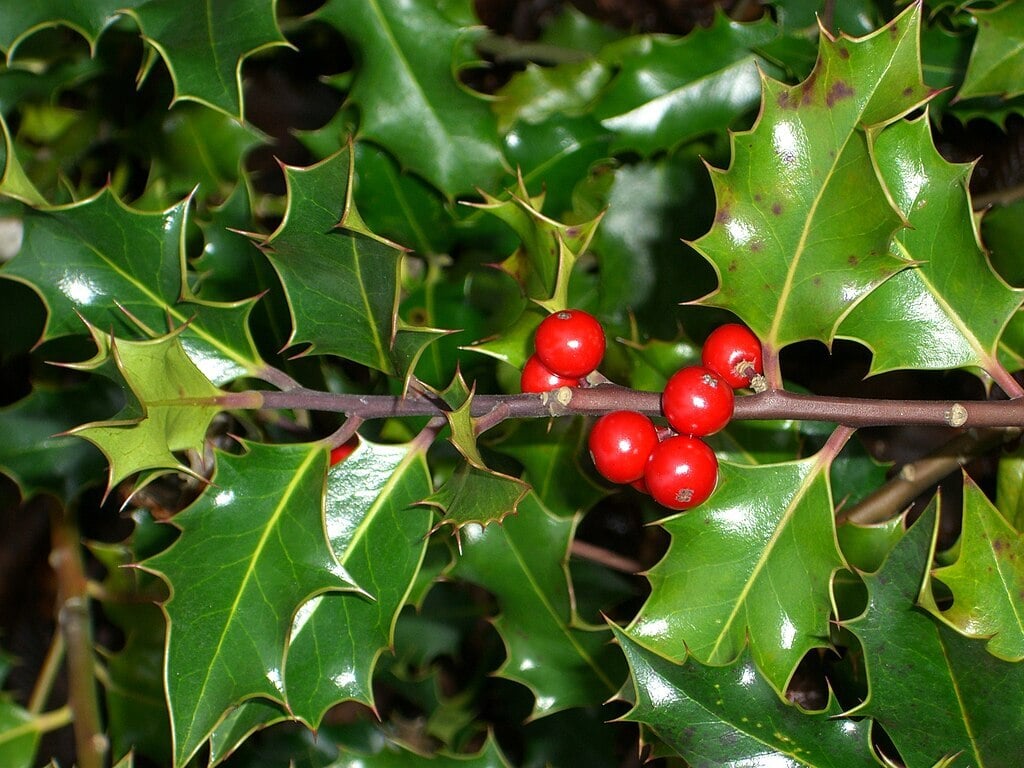
Boxwood
Boxwoods are another broadleaf type of evergreen that are popular in residential yards, often used as a hedge. They provide structure as foundational plantings. Cold-hardy varieties like Winter Gem or Green Velvet tend to perform best in our climate.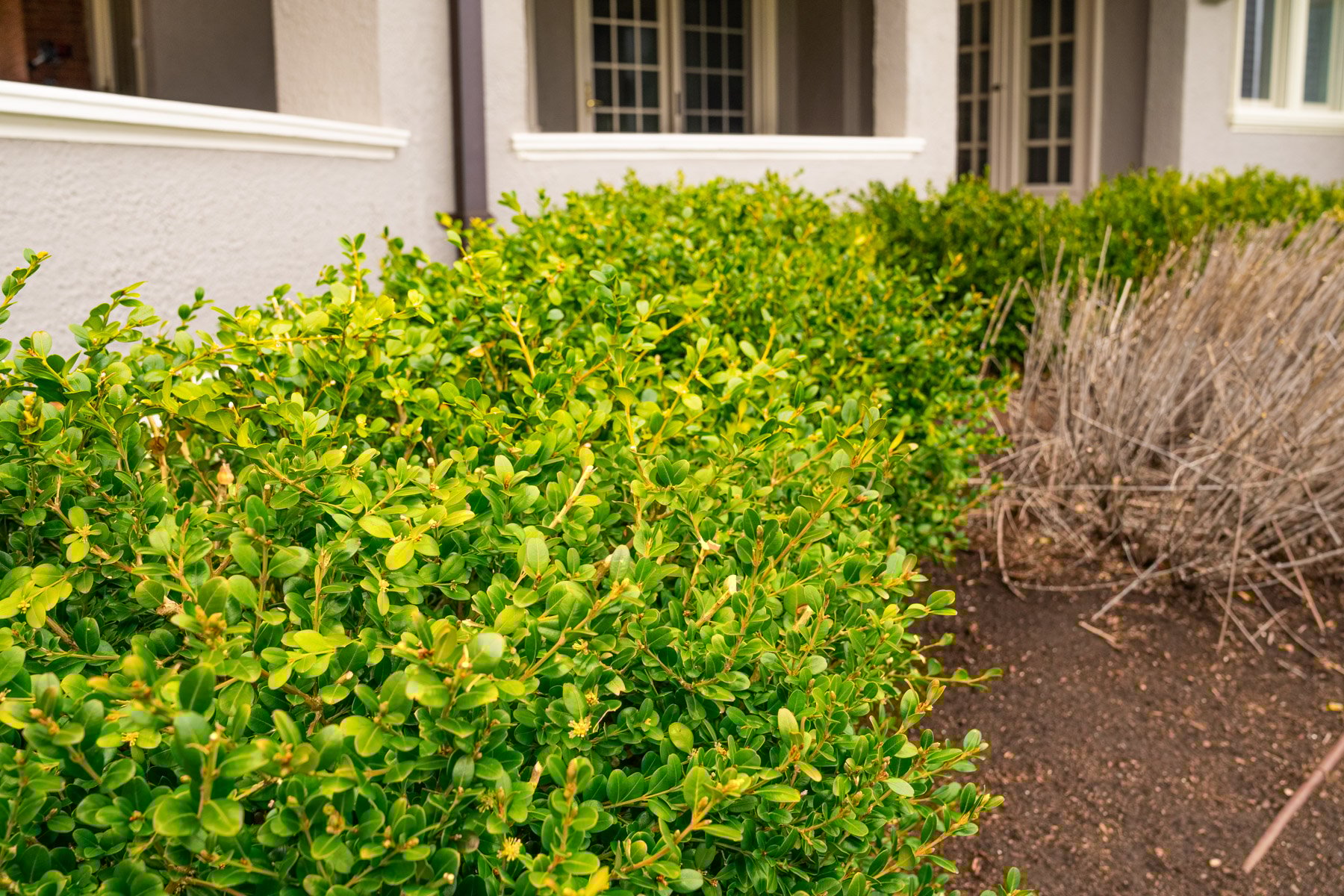
Rhododendron
Choosing Rhododendrons in New England usually means opting for hardy varieties. This is another evergreen tree type that prefers acidic, well-drained soil. Rhododendrons do need some protection from the wind as they are prone to moisture loss and winter damage.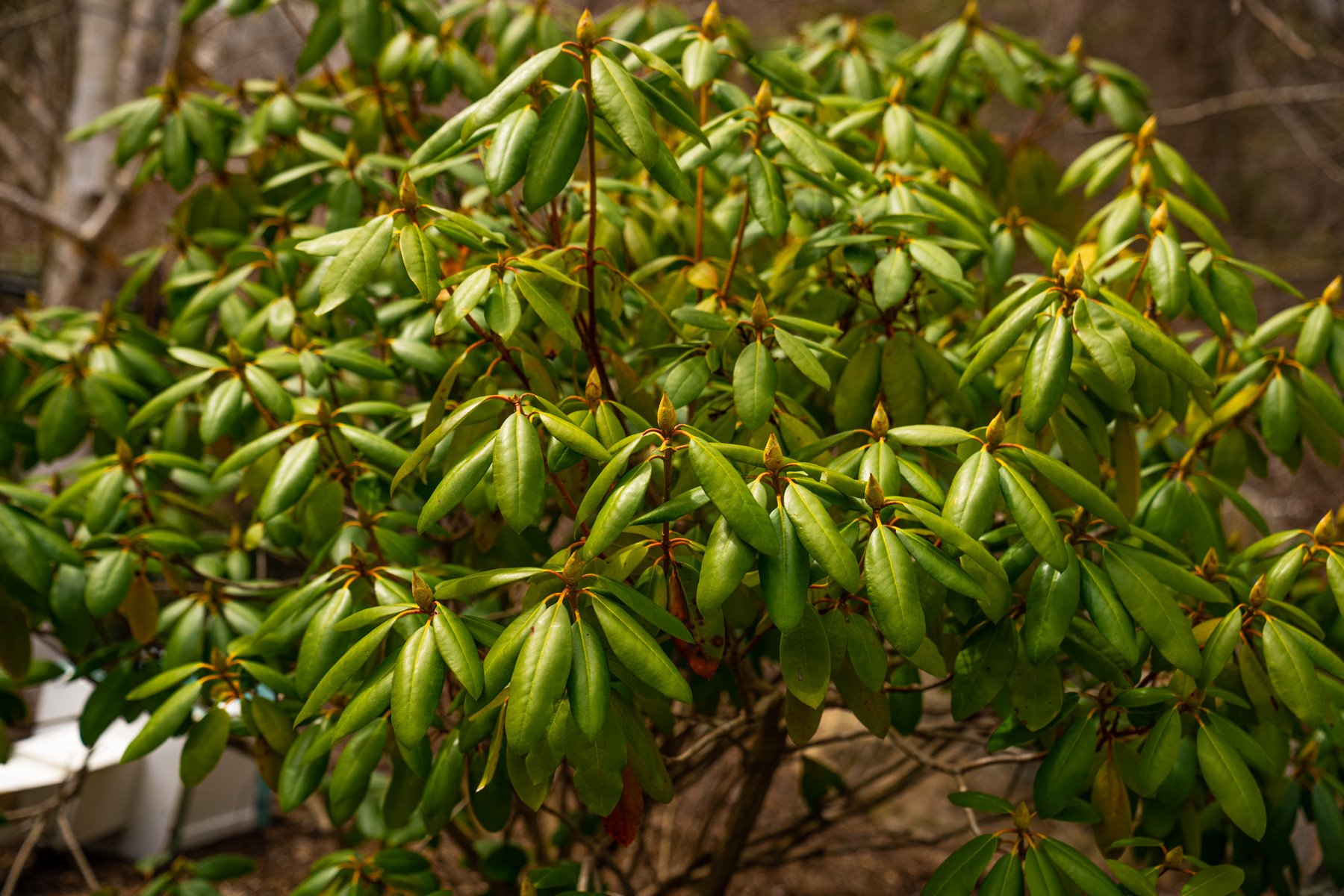
Evergreen Tree Identification
With all of these different types of evergreen trees, how can you tell them apart? You might think that most evergreens look alike, but there are definitely distinguishing features including the structure of the needles, the shape and growth of cones, and the bark.
For instance, there are differences between a spruce vs. a pine, and a pine vs. a fir. You just have to know what to look for.
Understanding evergreen tree identification features can help you figure out what’s growing on your property. Let’s look at some of the identifying features of a pine tree, spruce tree, and fir tree.
Identifying a Pine Tree
One of the identifying features of a pine tree is that its needles grow in clusters or bundles, in groups of 2 to 5 needles. These needles are narrow, long, and smooth.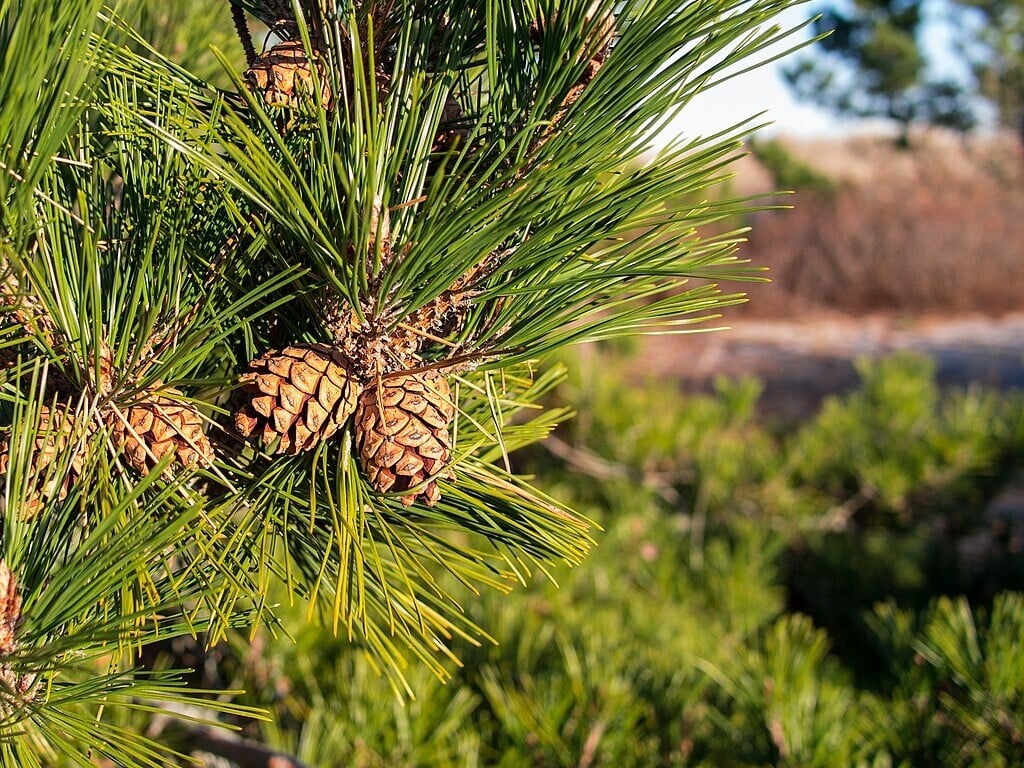
In addition, the cones from a pine are usually rigid and hang downward. And the bark of a pine is thick and scaly.
Identifying a Spruce Tree
The spruce tree, on the other hand, has needles that grow individually (a big difference when comparing a spruce vs. a pine). These needles are usually sharp-pointed and square-shaped.
The cones of a spruce also hang downward, like a pine, but they are thin-scaled and flexible (not rigid and inflexible, like those on a pine). You would be able to slightly bend a spruce cone, but not a pine cone.
Identifying a Fir Tree
Like the spruce, fir tree needles grow individually. Fir tree needles are also flat and round, instead of being sharp. They are soft and bendable.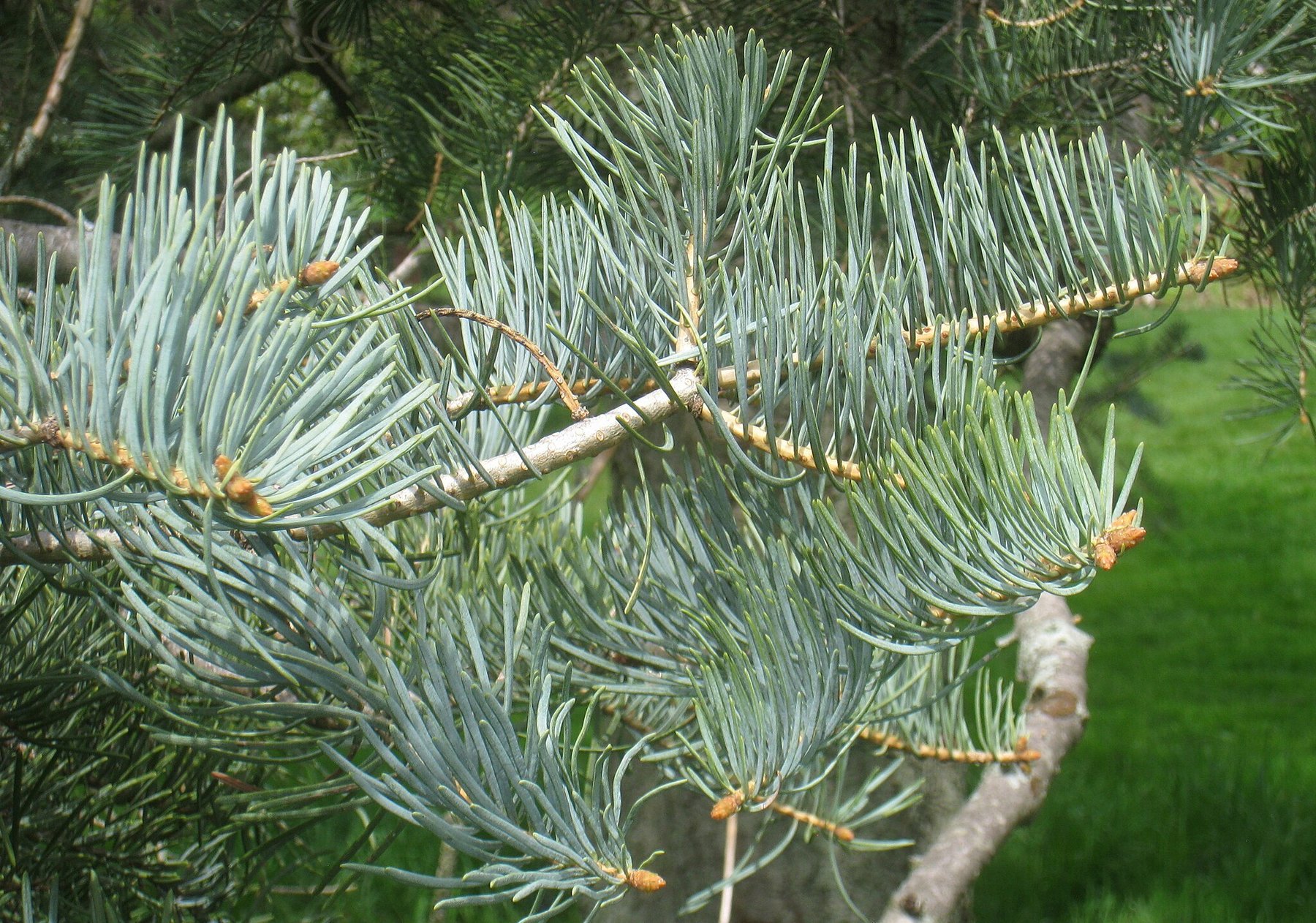
As far as the cones, fir cones stand upright on the branch, an identifiable difference from spruce or pine trees with downward-hanging cones.
Signs of Evergreen Problems
Evergreen trees are typically hardy and low-maintenance but that does not mean they aren’t without potential problems.
Let’s discuss some of the problems you could see arise in your evergreen trees and what to do about them.
Pest and Disease Problems
Various types of evergreen trees can be subject to disease and pest problems.
For instance, Needle Cast Disease is a common disease that we see in some evergreen conifers. Needle Cast is a collective term used to describe a variety of diseases caused by various fungi that can infect the needles of Pines, Spruce, Douglas Fir, and True Fir trees.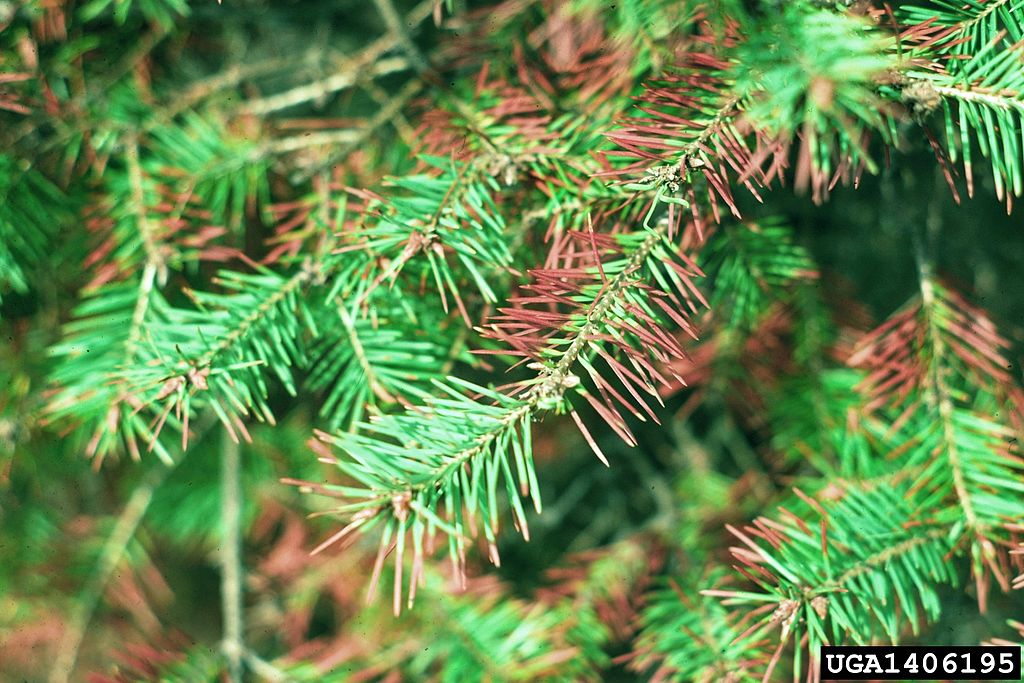
Pests like scale insects and spider mites can also cause trouble for your evergreens. They use their piercing mouthparts to suck sap from your plants, which will eventually cause them to turn brown.
Planting Errors
Evergreens can also face trouble if they’ve been installed in a poor location. There’s a saying in the tree industry that goes “right plant, right place.” It means that in order to thrive, you must select a plant that’s going to perform well in the location you’re installing it.
In the case of evergreens, they tend to thrive in full sun and well-drained soil. If you’ve installed your evergreen shrubs in a location where it’s always wet and soggy (maybe a low point where water tends to drain), this might be a reason why it is failing to perform well. Poorly planted evergreens may eventually turn brown.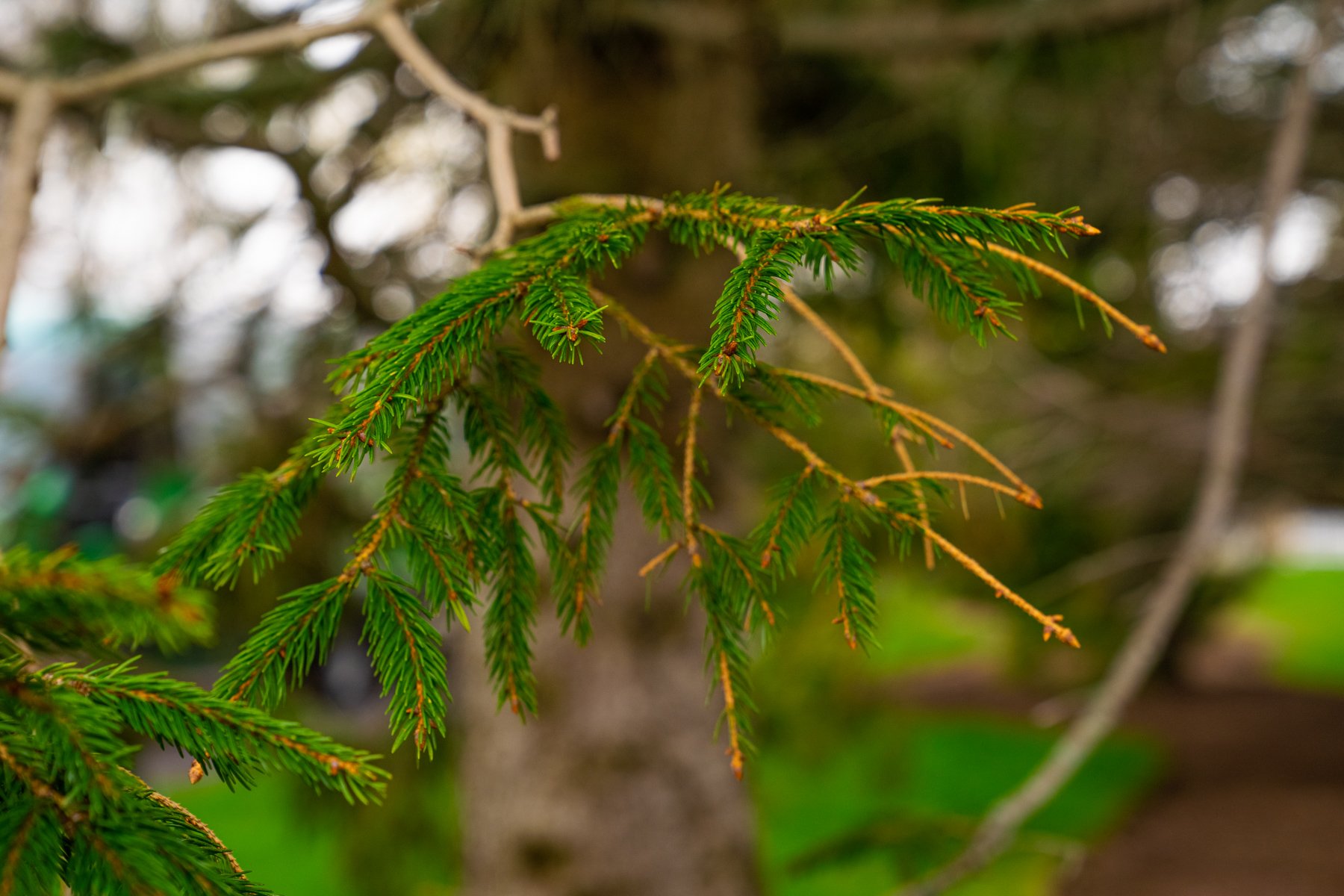
Desiccation
Desiccation (also called “winter burn”) is another common evergreen problem that we see in various evergreen tree types. This occurs when the ground is frozen and the tree or shrub cannot absorb water from the soil.
An anti-desiccant spray can help prevent winter burn by providing a protective coating that keeps the leaves or needles from losing too much water through evaporation. This helps to save every last drop for the plant.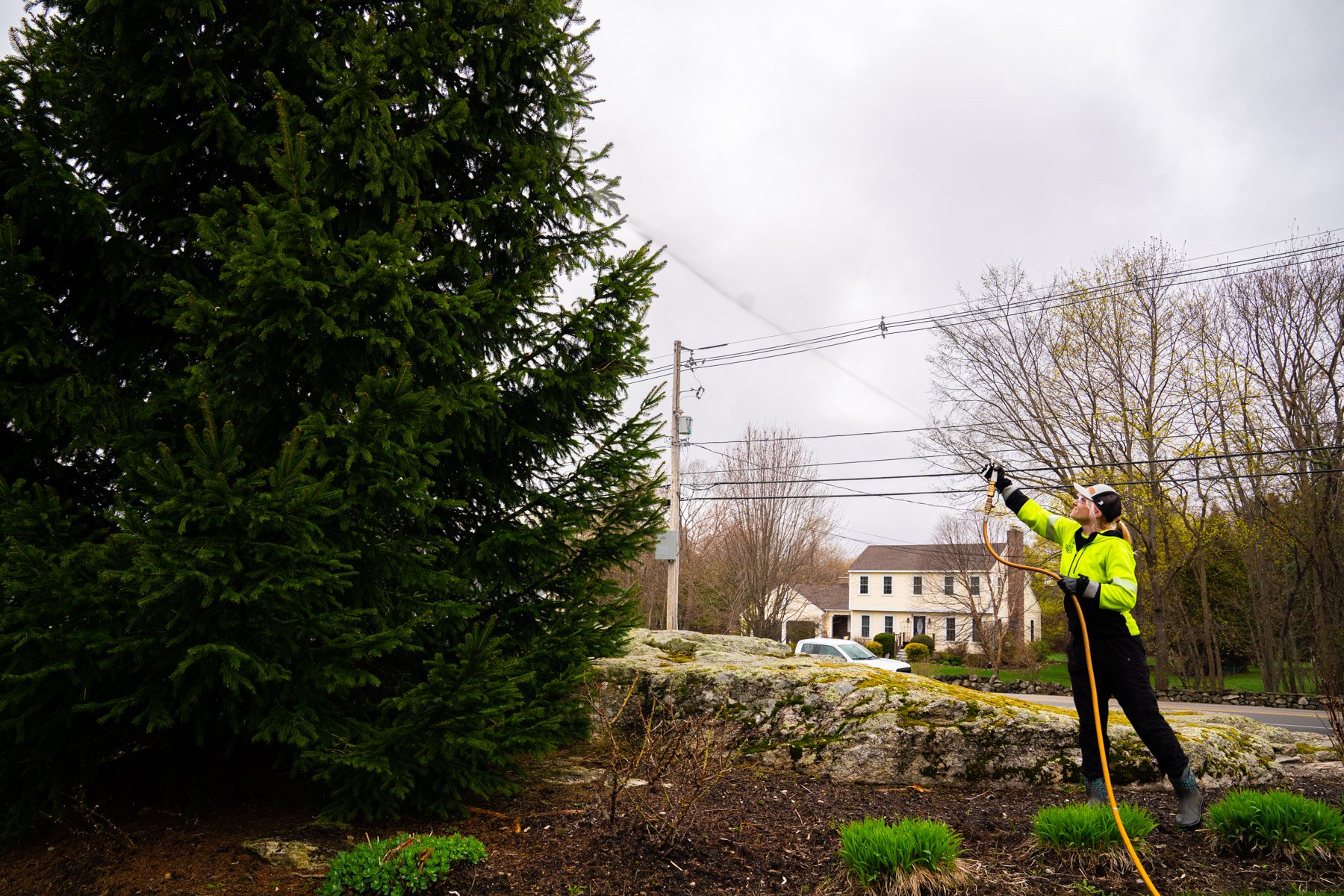
A Certified Arborist can apply an anti-desiccant spray to the trees and shrubs that can benefit from one.
Choosing Tree Care in Southern NH, Northeastern MA, and Southern ME
Whether you have evergreens or other tree types on your property, you want to find a tree care partner that you can trust.
We know that trees can be complicated, but you aren’t on your own in figuring it all out. At Seacoast Tree Care, we are here to provide guidance and professional services that will help you best care for your New England property.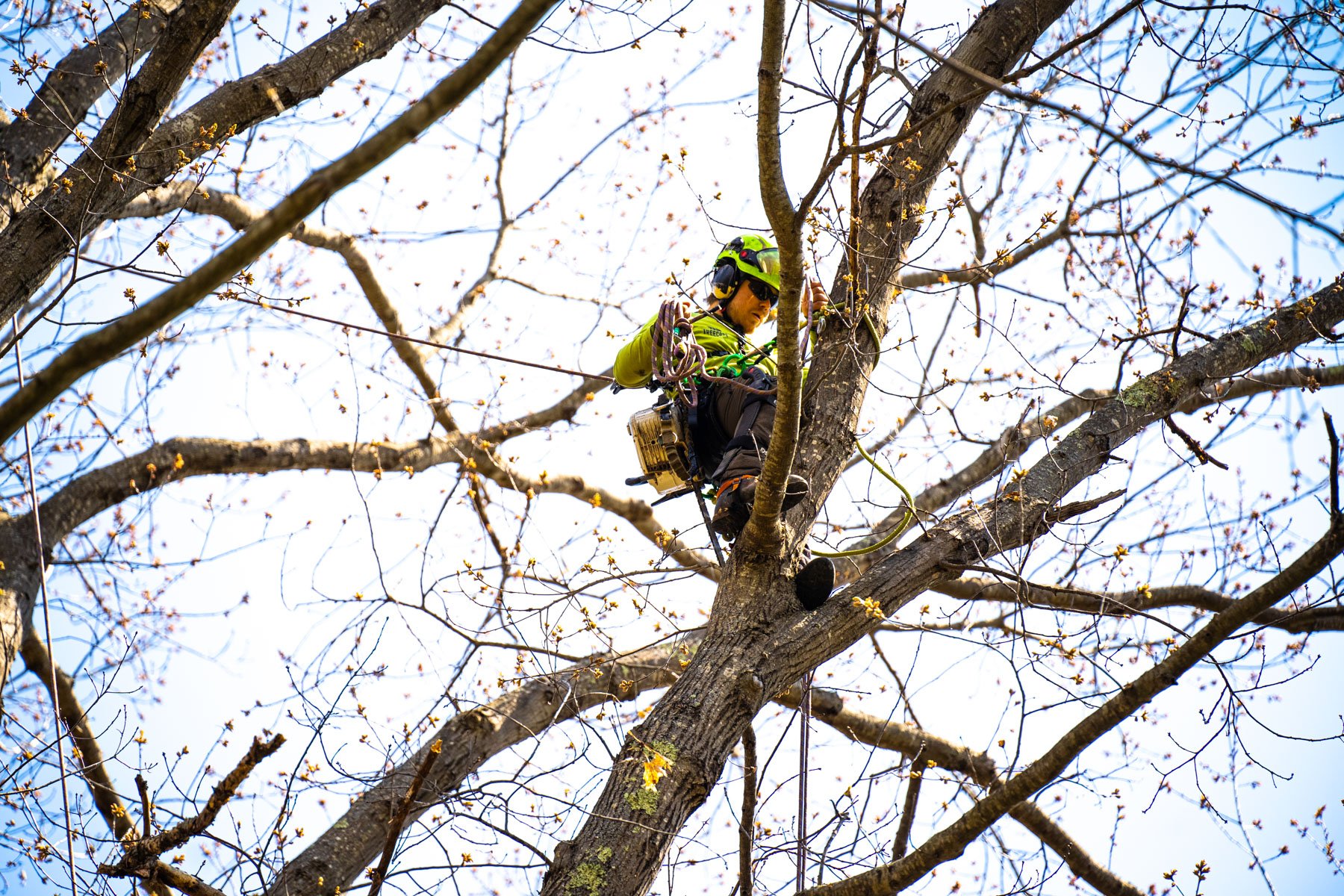
We offer tree pruning services, including pruning evergreen trees and shrubs. While we do have a pruning minimum (we won’t come out to prune just one evergreen shrub), homeowners usually have plenty of work that they are eager to have professionally handled on their property.
By choosing professional pruning, you can let go of the worries and know that these services are being handled properly. Getting the most value out of your evergreens does boil down to caring for them the right way.
We also offer plant health care services that incorporate things like fertilization, disease, and pest control. This will not only help remedy problems but can prevent them from occurring in the first place.
When you make a wise choice in tree care services, you’ll ultimately take an important step in protecting the value of your property’s trees.
Ready for safer and healthier trees at your New Hampshire, Maine, or Massachusetts home? Request your consultation and get a free quote for tree pruning services. We service properties in and around the Seacoast Region like Stratham, NH, Kittery, ME, and Haverhill, MA. By making a wise choice, you’ll know your trees are in good hands.

Image Sources: eastern red cedar, holly, pine cones, fir needles, needle cast disease