
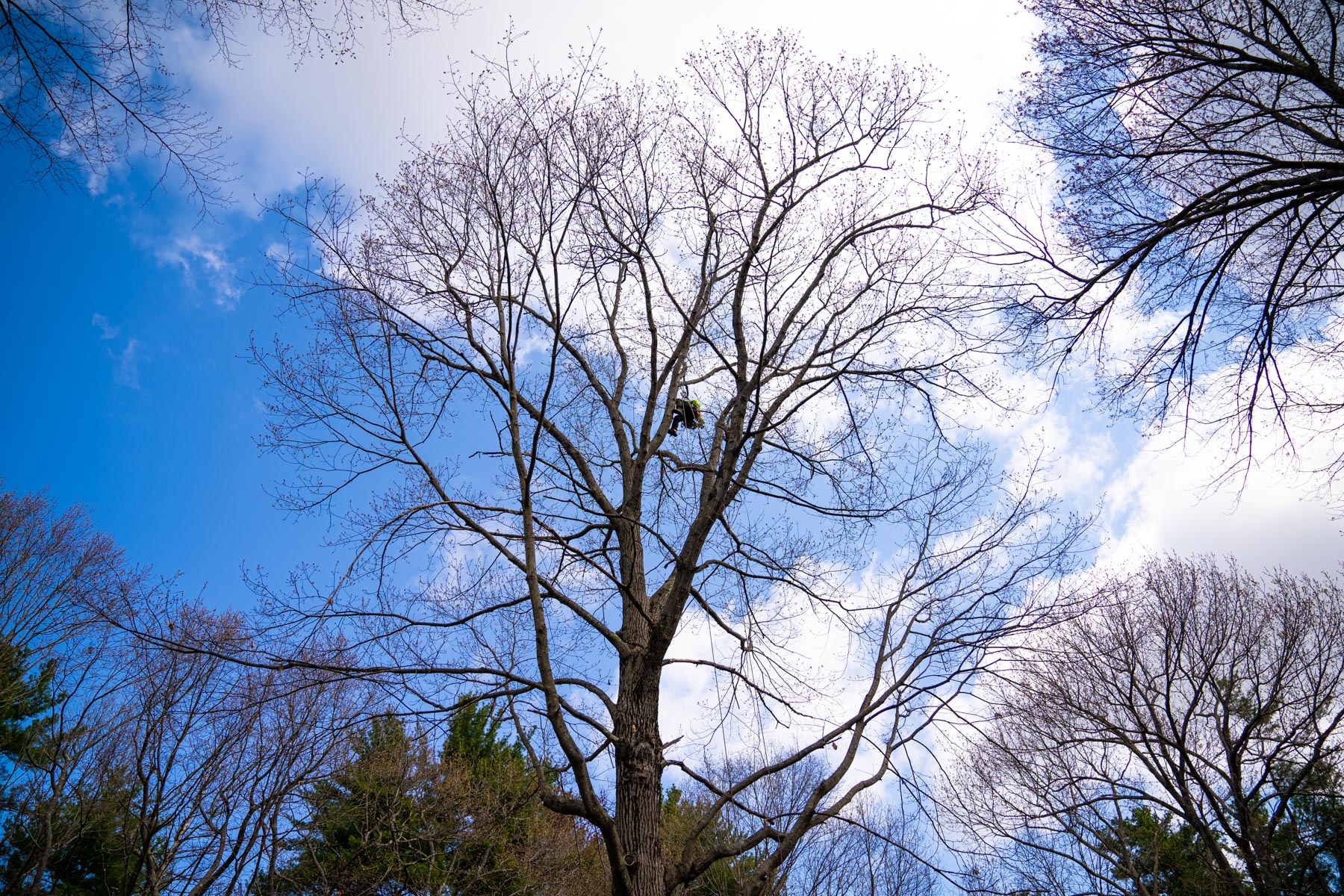
Trees can add beauty, shade, and aesthetic appeal to a property. That’s why you want to do what you can to maintain their health. You probably already know that tree pruning is important for your trees’ health. But many people don’t realize there are different types of pruning, with different goals.
Crown cleaning is a targeted tree pruning service that removes dead, dying, diseased, or damaged branches in the tree’s canopy. It’s probably the most common type of pruning that is performed. By selectively clearing the crown, you can gain some valuable benefits, including enhanced health and structural integrity.
In this article, we’ll dive into everything you should know about tree crown cleaning so that you can ensure you’re getting the most out of the service.
Jump To:
What is Tree Crown Cleaning?
What Parts of a Tree Get Removed During Crown Cleaning?
What are Signs a Tree Could Benefit From Crown Cleaning?
How an Arborist Can Help Determine if Your Tree Needs Crown Cleaning
FAQs on Tree Crown Cleaning
Choosing Tree Pruning Services in Southern NH, Northeastern MA, and Southern ME
What is Tree Crown Cleaning?
Tree crown cleaning is the most commonly used form of pruning and is focused on the primary goal of removing diseased, dying, decaying, or damaged wood. It involves only removing problematic branches. This is the basis of the pruning service, though sometimes, other forms of pruning techniques are sometimes needed if there are other goals for the tree.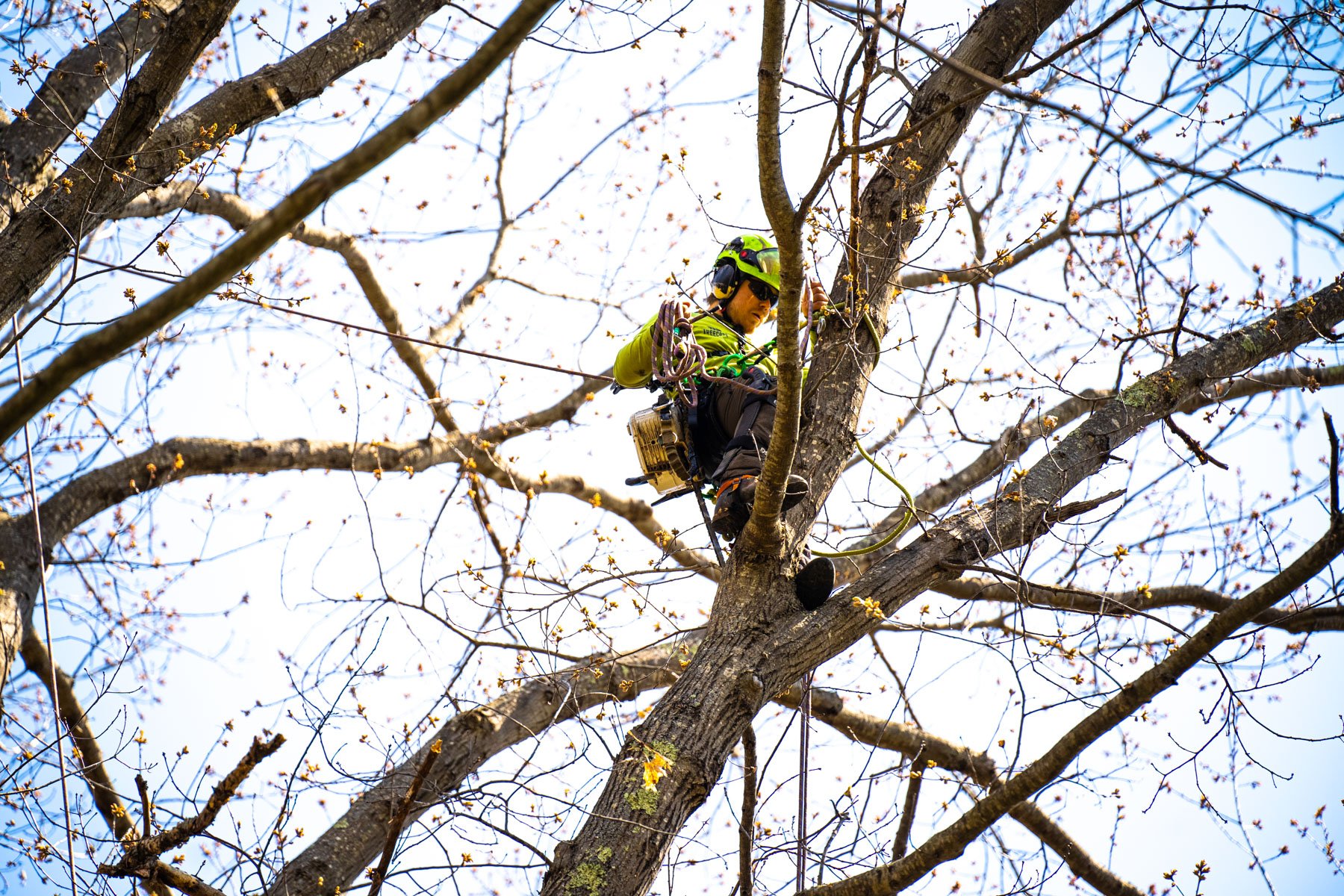
Let’s compare some of the other forms of tree pruning.
Tree Crown Reduction vs Crown Cleaning vs Crown Thinning
- Crown Cleaning: This is the hallmark pruning service and what would be used assuming there’s no other “needs” for the tree. With crown cleaning, the goal is to identify the dying, dead, or diseased branches and remove them. This prevents future problems including the spread of decay. This is considered one of the most basic and common forms of tree pruning and it serves a very vital purpose.
- Crown Thinning: This is similar to crown cleaning in that we are still removing dying, dead, or diseased branches, however, on top of that, this tree pruning method also aims to reduce the weight of the tree. That means that some strategically-selected live limbs may also be removed. One reason to perform crown thinning is to improve sunlight filtration. It can also reduce the risk of the tree uprooting during a storm.
- Crown Reduction: This is essentially a combination of thinning and cleaning, however, the goal is to reduce the overall height and spread of the tree. This would be a tree pruning method needed if the tree is getting too big for the area where it’s planted and needs to be scaled back.
There is also a fourth type of pruning that is sometimes used: Crown Raising. This is highly specific as it’s limited to situations where lower limbs might become problematic.
During crown raising, our goal is to remove lower limbs. This is very purposeful if lower limbs are causing problems. When crown raising is performed on a younger tree, you can prevent a lower limb from becoming a problem in the first place (such as hanging over a sidewalk or street).
What Parts of a Tree Get Removed During Crown Cleaning?
During crown pruning, only dying, damaged, decaying, or diseased branches are removed. The goal is to improve tree health, safety, and appearance, without unnecessarily altering its natural form.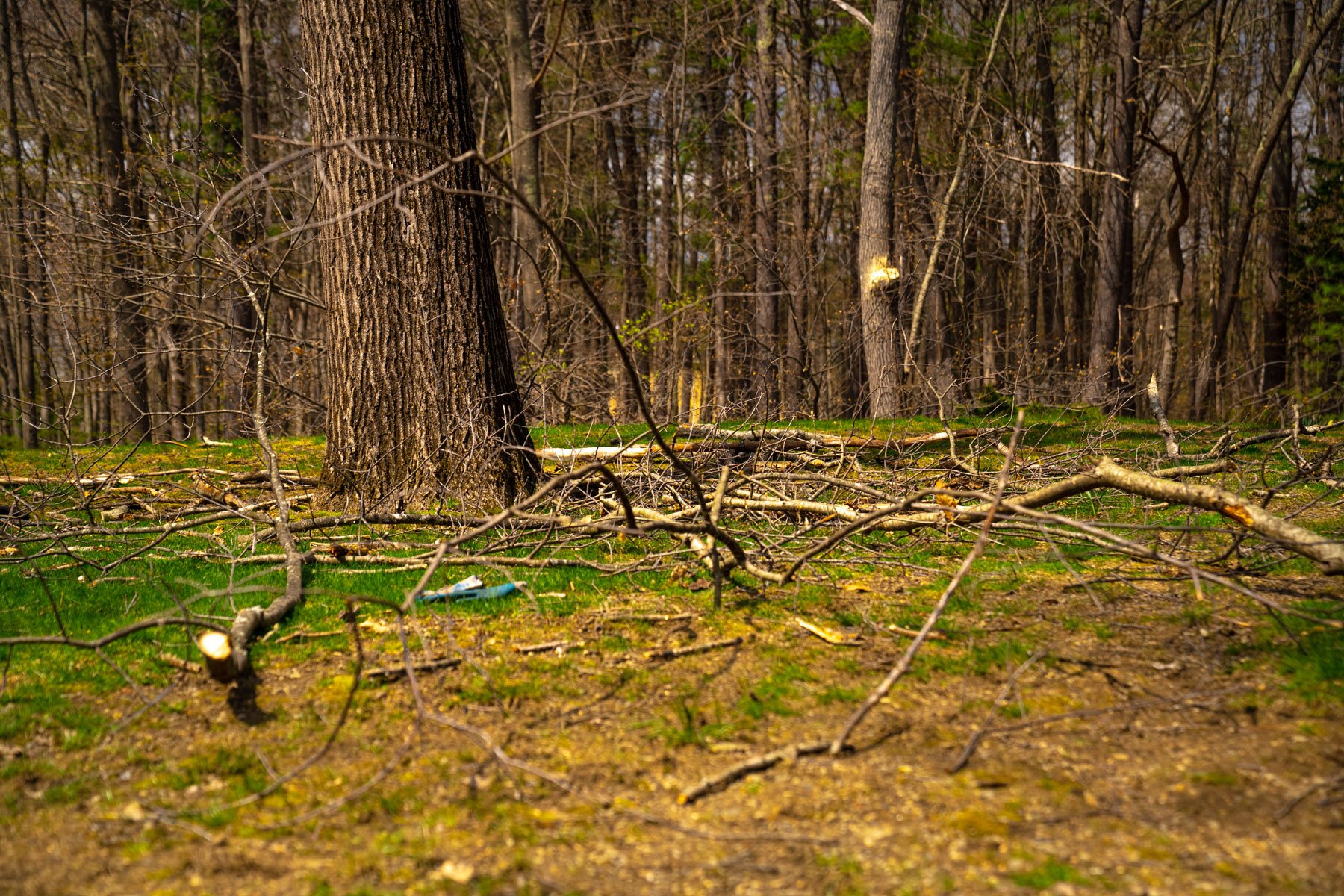
Some of the types of branches that would be removed during this service include:
- Dying or diseased branches: Getting rid of these problematic branches can help limit the spread of disease and also keep the canopy healthier.
- Dead branches: Branches that have died can fall and cause bigger problems. Removing dead branches improves the tree’s safety profile.
- Weak branches: Sometimes a Certified Arborist will identify branches that are weak or poorly attached. These can also pose risk and are best coming down.
- Broken or damaged branches: Branches that are visibly broken or damaged, especially after a storm, should be removed for safety.
Unlike other pruning techniques, crown cleaning is not about drastically reducing the canopy or the tree’s size. It’s about selective removal while preserving the tree’s natural shape and structure.
What are Signs a Tree Could Benefit From Crown Cleaning?
Trees can pretty much always benefit from pruning services and often the signs that a tree “needs it” aren’t visible to the untrained eye. But there might be some things that you notice which could indicate it’s time for pruning.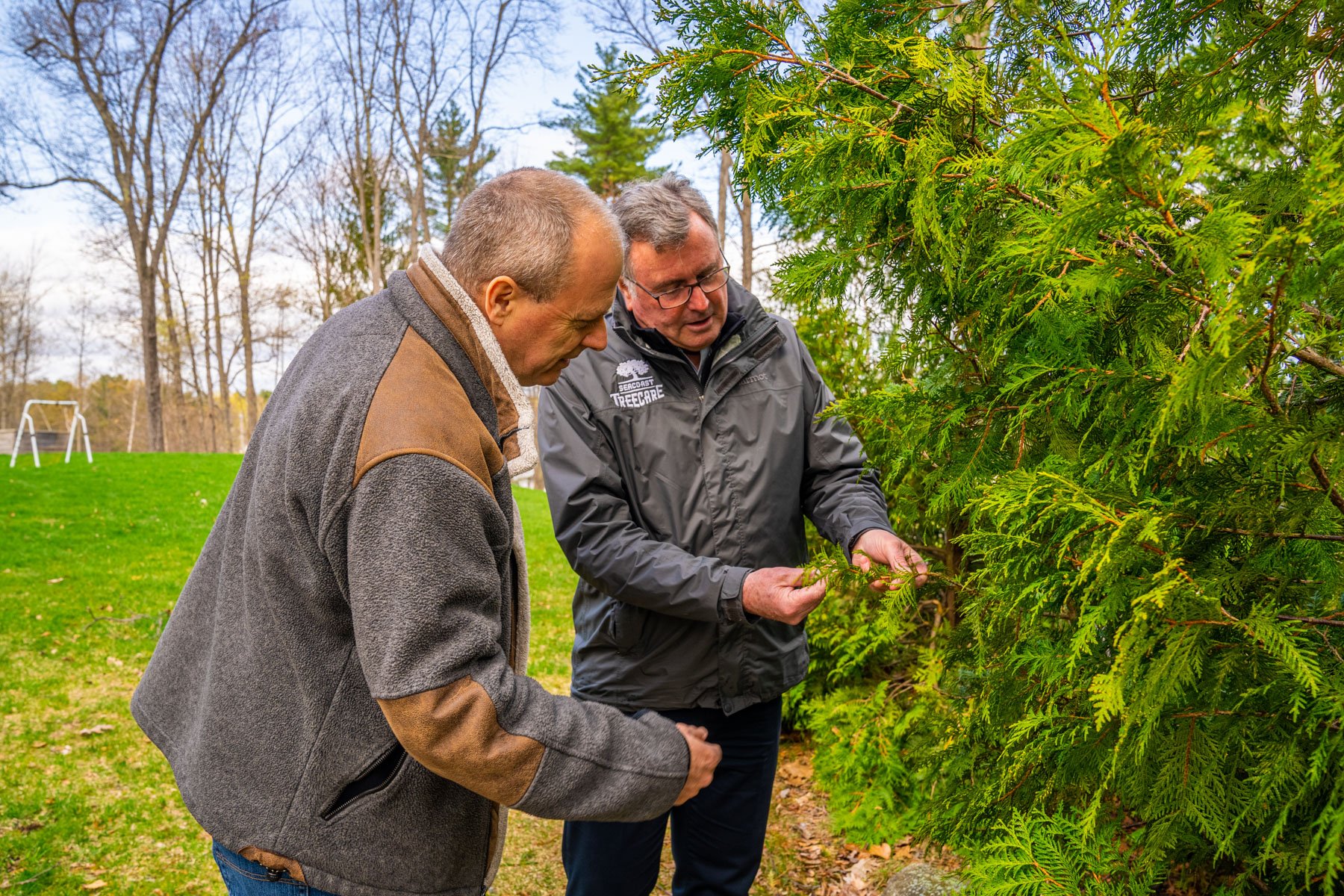
Some potential signs a tree could benefit from crown pruning include:
- Visible dead or hanging branches
- Noticeable disease symptoms like leaf spots
- Weakly attached branches
- The canopy looks uneven and cluttered
- Branches that are rubbing or crossing (don’t always need to be removed but worth evaluating)
- Lots of tree sucker growth
Again, there can be a lot going on in the tree canopy that you might not be able to see at all. It’s always best to have a tree evaluated by a Certified Arborist.
How an Arborist Can Help Determine if Your Tree Needs Crown Cleaning
A Certified Arborist can determine if your tree needs crown pruning by evaluating the canopy, branch structure, and overall tree health. During an inspection they’ll be looking for dead wood, damaged or diseased limbs, weak branch attachments, potential hazards, and more.
You want to make sure that you are working with a well-trained company that is employing best practices when it comes to pruning services. Performing tree pruning incorrectly can be detrimental to your tree’s health and safety profile.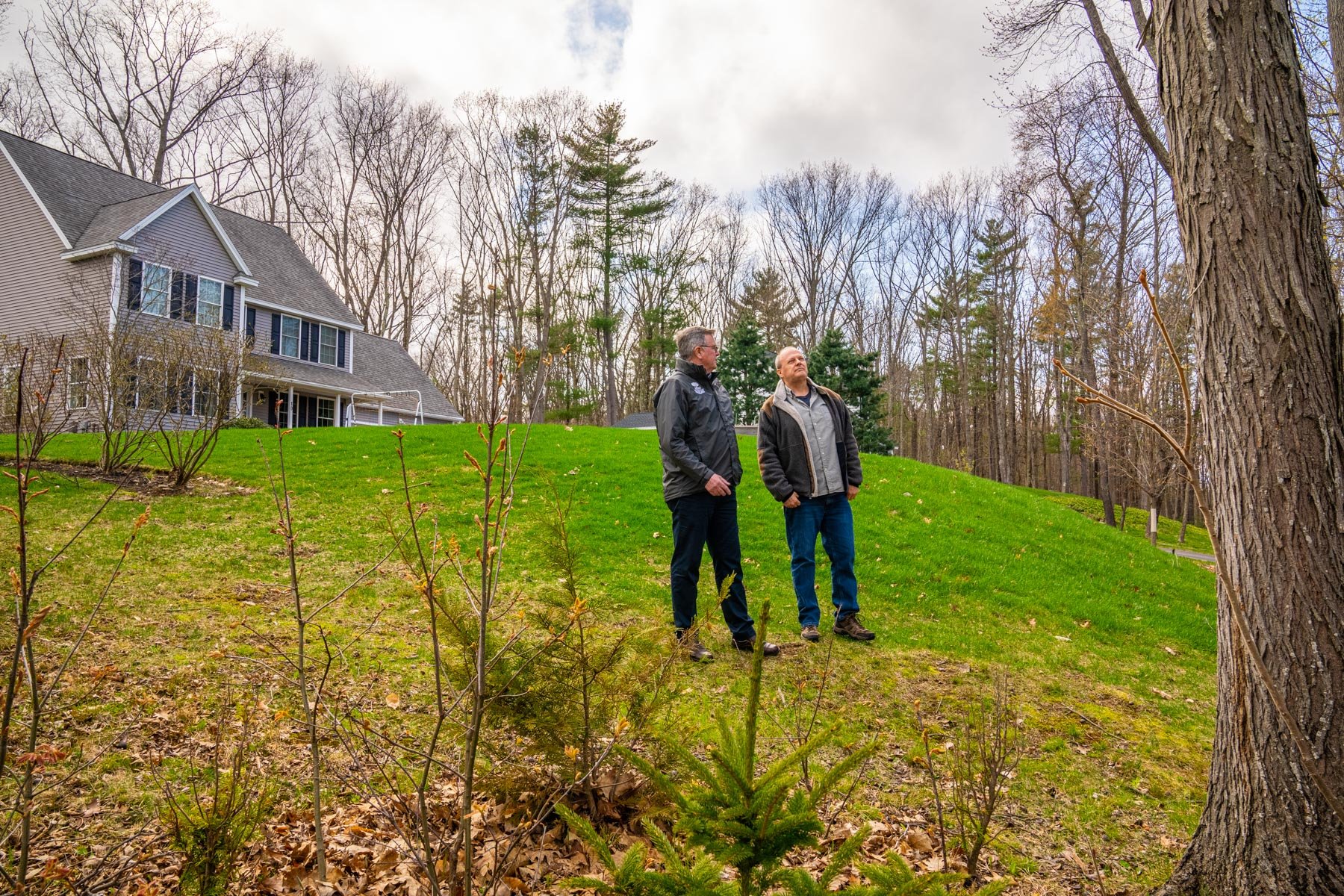
There’s even an outdated pruning practice that we still see some tree pruning companies make. This is called “tree topping” and it’s a big mistake. If you’ve ever seen a tree lopped in half, this is tree topping. Even though it has been proven to be an improper practice, some companies still perform it to this day.
FAQs on Tree Crown Cleaning
Does crown cleaning change the shape or size of a tree?
Generally no, crown cleaning should not significantly change the tree’s shape or size. The service is designed to involve selective branch removal, targeting dead, dying, diseased, or damaged branches.
How long does tree crown cleaning typically take?
There are many factors that will determine how long crown pruning will take. This includes the size and height of the tree, its overall condition, the tree location and accessibility, and whether specialized equipment is needed.
Can crown cleaning help after a tree has been damaged in a storm?
Yes, crown cleaning can be helpful after storm damage as this is a time when a tree might have accumulated damaged or partially detached branches. These should be removed for safety.
Is there a best time of year to have a tree's crown cleaned?
While it can be dependent on the species, most trees can have crown cleaning done at any time of the year. However, there’s a good case to be made for crown cleaning in the winter. During this time many deciduous trees are dormant and the bare canopy makes it easier to identify problematic branches.
How often do trees need crown cleaning?
In general, tree pruning is more about what the tree needs rather than any set schedule. As a general rule of thumb, mature trees are typically pruned every 5 to 10 years and younger trees are pruned every 3 to 5 years. But it really does depend upon what’s going on with the tree. If there’s been storm damage, trees should be assessed right away.
Should I hire a Certified Arborist to take care of my trees?
Yes, tree care is very complicated and mistakes can be serious. We definitely recommend choosing a company that employs Certified Arborists to care for the trees on your New England property.
Choosing Tree Pruning Services in Southern NH, Northeastern MA, and Southern ME
Pruning is one of the most valuable things that you can do for your trees. And when your pruning services are being handled by a Certified Arborist, you’ll feel confident they know what’s best.
Knowing how often and when to prune trees are important factors to the success of the service.
At Seacoast Tree Care, we’re committed to preserving the health and beauty of trees by performing vital services like tree pruning, the right way. When you make a wise choice in tree pruning services, you’ll ultimately take an important step in protecting the value of your property’s trees.
Ready for safer and healthier trees at your Southern NH, ME, or MA home? Request your consultation and get a quote for tree pruning services. We service properties in and around Stratham, NH, Kittery, ME, and Haverhill, MA. By making a wise choice, you’ll know your trees are in good hands.